by Hengchang (Alan) Liu <hl5843@nyu.edu>
During New York Art Week this May, the High Line Art Corridor became a central hub for the global art market, hosting a vast array of concurrent gallery exhibitions and independent presentations. Among these were notable satellite fairs such as NADA New York, held at the Starrett-Lehigh Building, and Future Fair at Chelsea Industrial.
Separated by only a few blocks, the two venues offered fundamentally different curatorial atmospheres. NADA New York felt massive and marketplace-driven, leaning heavily on gallery-standard presentations of painting and sculpture arranged in a high-volume grid. It captured the frantic density of Art Week, gathering global works into a hyper-concentrated marketplace. Future Fair, by contrast, made stronger use of its boutique scale through a more layered and deliberately arranged layout. Instead of a predictable maze of booths, it embraced a compact design with sharp turns and partial openings that encouraged slower, more conscious encounters with the art. This architectural contrast directly reshaped the viewing experience, carving out ideal environmental conditions for fragile installations, light-based media, and interactive systems that might otherwise have been less visible within NADA’s sprawling layout.
NADA New York 2026 — The Concentrated Matrix
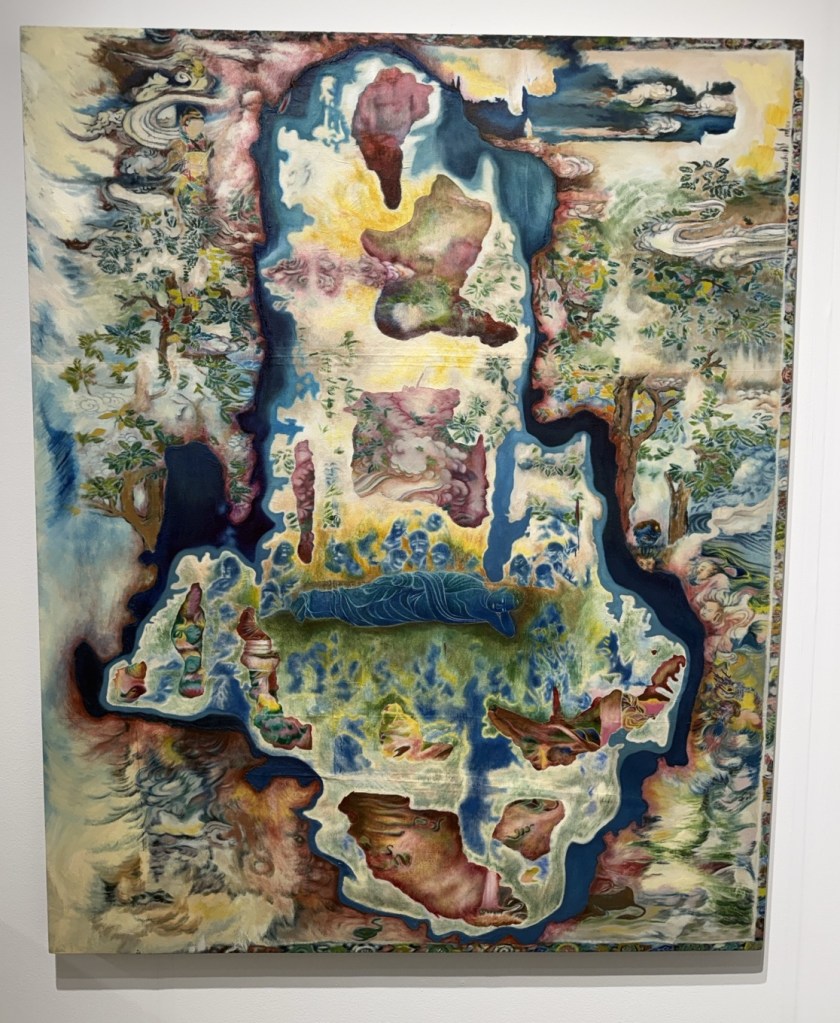
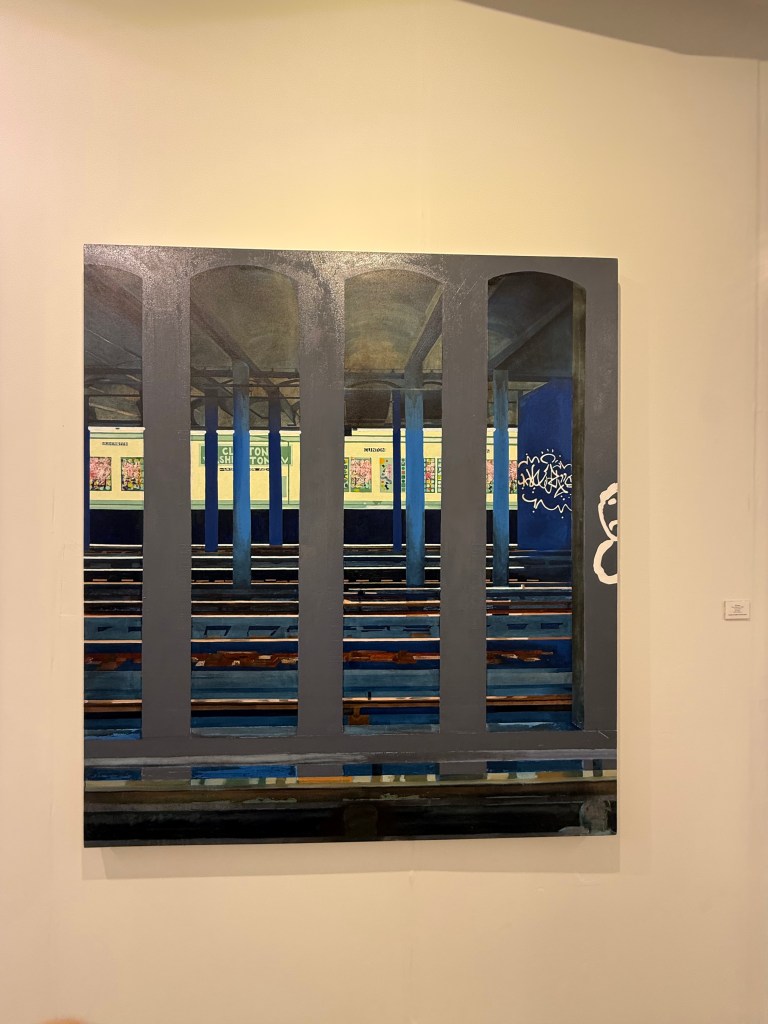
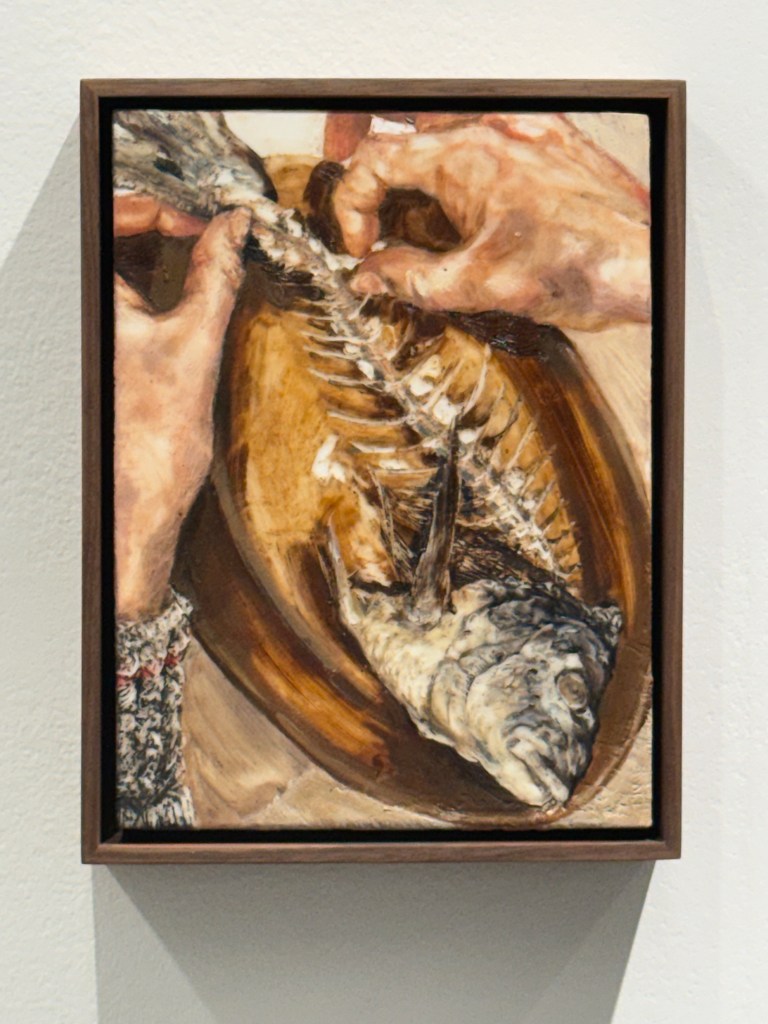
Unfolding across the expansive industrial floors of the Starrett-Lehigh Building, NADA New York established an immediate impression of structural density. The fair’s spatial design translated into a repeating matrix of uniform booths and corridors. Rather than offering a singular, curated narrative with a clear institutional route, NADA functioned as a compressed map of the contemporary art market, where global gallery presentations converged into a highly concentrated architectural grid.
This viewing experience was shaped by traditional, object-centered gallery formats, with painting, drawing, and sculpture establishing a familiar material rhythm. However, this adherence to conventional mediums did not yield a predictable exhibition. Instead, the rigid booth system served as a neutral framework that threw into sharp relief a vast pluralism of visual languages. By gathering galleries from North America, Europe, and East Asia, the fair’s regional diversity manifested as a complex dialogue between disparate symbolic traditions, urban environments, and material concerns.
Several presentations highlighted how contemporary painting continues to absorb and rework historical imagery through localized cultural contexts. For instance, a large-scale composition by a Singaporean artist directly engages with religious iconographies, centering on a reclining Buddha surrounded by shifting, landscape-like topographies. The canvas employs dense, ornamental layers of color and fragmented perspectives, suggesting how classical non-Western spiritual motifs can be recontextualized within the fragmented visual language of contemporary global art.
In contrast to these mythic and spiritual spaces, other works grounded themselves in the immediate textures of the contemporary built environment, reflecting the participants’ localized geographies. A stark architectural painting by a New York-based artist frames a subway platform—specifically the Clinton-Washington station—through a heavy foreground partition. The cold geometry of the pillars, the blue-hued depth of the tracks, and the spontaneous intervention of graffiti capture the specific atmospheric weight of New York’s public transit system, showing how regional infrastructure is codified into gallery-standard realism.
Meanwhile, other artists shifted the scale from the macro-architectural to the tactile and corporeal. A small, deeply intimate canvas by an artist from the English countryside focuses intently on a domestic, raw materiality, depicting hands meticulously dissecting the skeletal remains of a fish on a plate. The visceral rendering of skin against exposed bone highlights a broader, cross-regional undercurrent within the fair: a fascination with organic textures, bodily fragments, and the quiet, everyday realities of organic life.
Future Fair: From Object to Encounter
Following the intense density of NADA, Future Fair offered a more compact but formally elastic viewing environment. Its boutique scale did not simply make the fair easier to navigate; it radically altered the rhythm of spectator attention. Rather than functioning as units within a sprawling commercial matrix, the booths unfolded as small, folded architectural spaces that facilitated close-range encounters with diverse media forms.
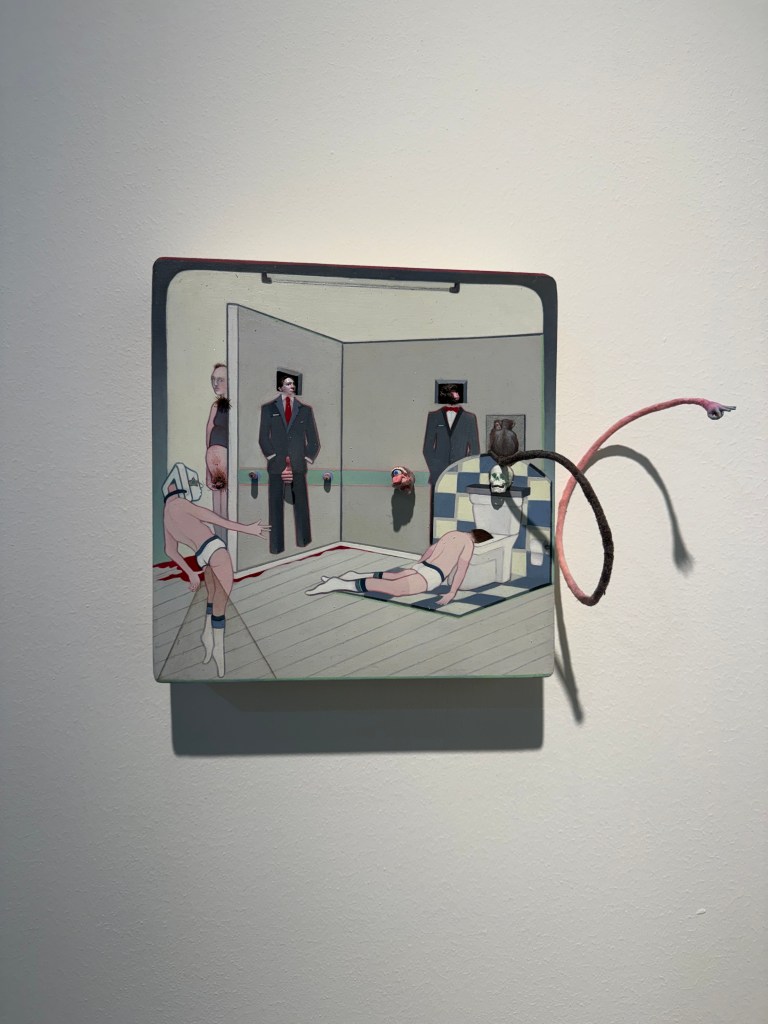
Importantly, the contrast between NADA and Future Fair should not be reduced to a simple opposition between tradition and experimentation. While painting and sculpture maintained a presence, they were consistently juxtaposed with practices more explicitly aligned with the fair’s futuristic namesake. The curatorial landscape leaned heavily toward themes of technological mediation, unstable bodies, and fragmented perception, pushing the artwork beyond the boundaries of the flat image.
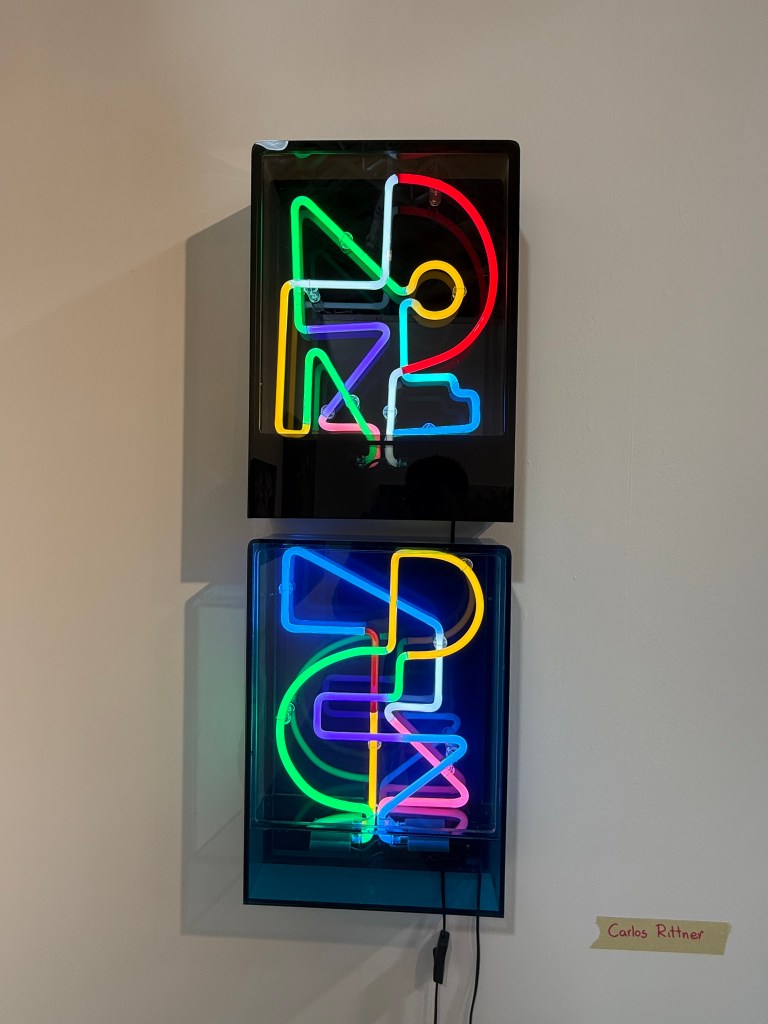
This tendency appeared through works that combined local cultural references, technological materials, and experimental modes of display. A neon-like light piece by Mexico City and Los Angeles-based artist Carlos Rittner transformed color and line into an active, glowing system of illumination, reconfiguring traditional space through artificial radiance. Nearby, other works subverted the historically rigid format of portraiture, extending the genre into a hybrid, interactive object. Works by Indigenous artists from Canada also introduced vibrant visual forms and environmental concerns, expanding the fair’s technological and experimental atmosphere beyond a narrowly digital framework.
While NADA used a rigid framework to showcase a pluralism of static objects, Future Fair leveraged its boutique, architectural layout to foster an environment where the boundaries between the viewer, the artwork, and the technological apparatus became productively blurred.
exonemo’s Hatch/et: Randomness, Code, and Self-Destruction
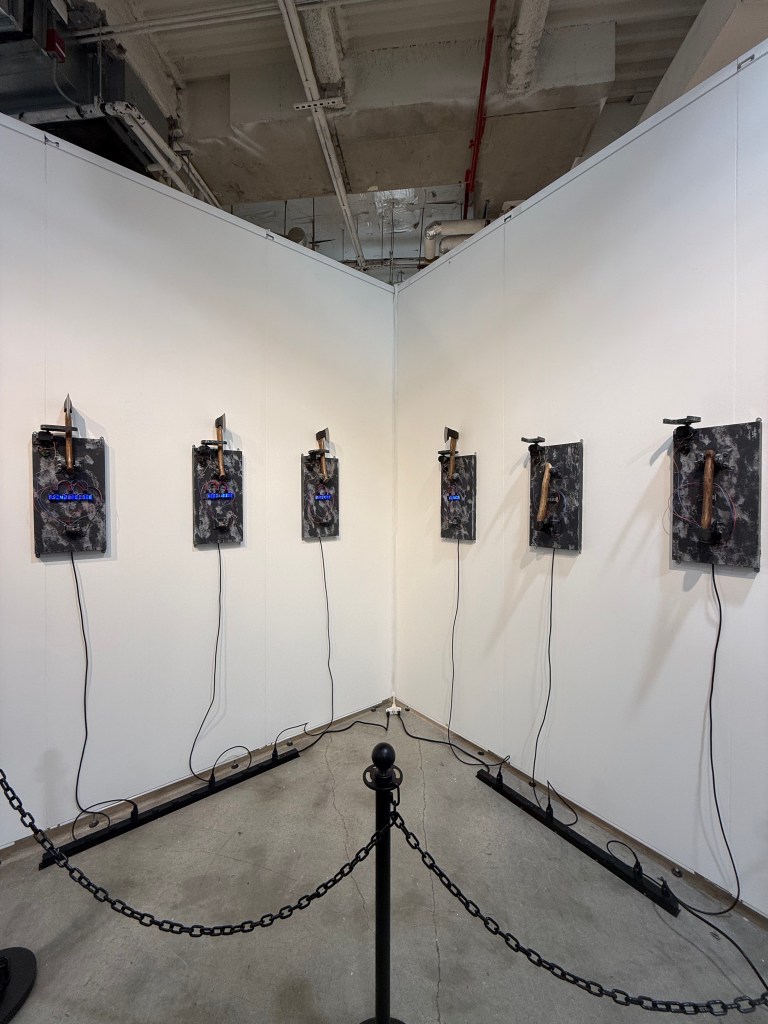
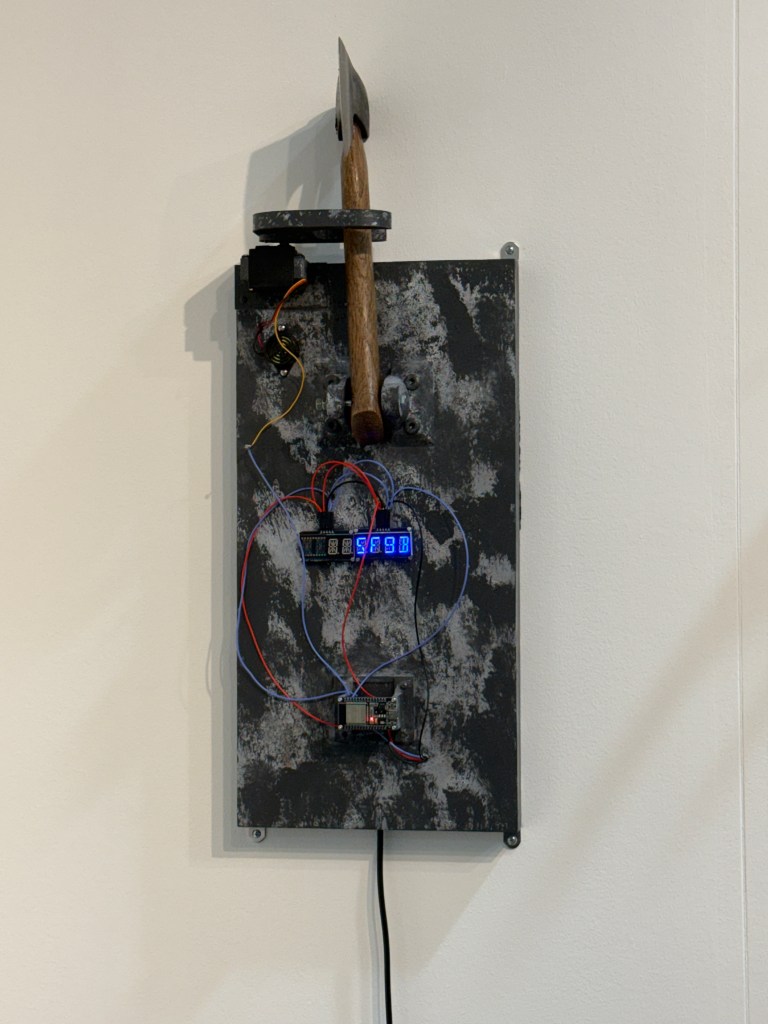
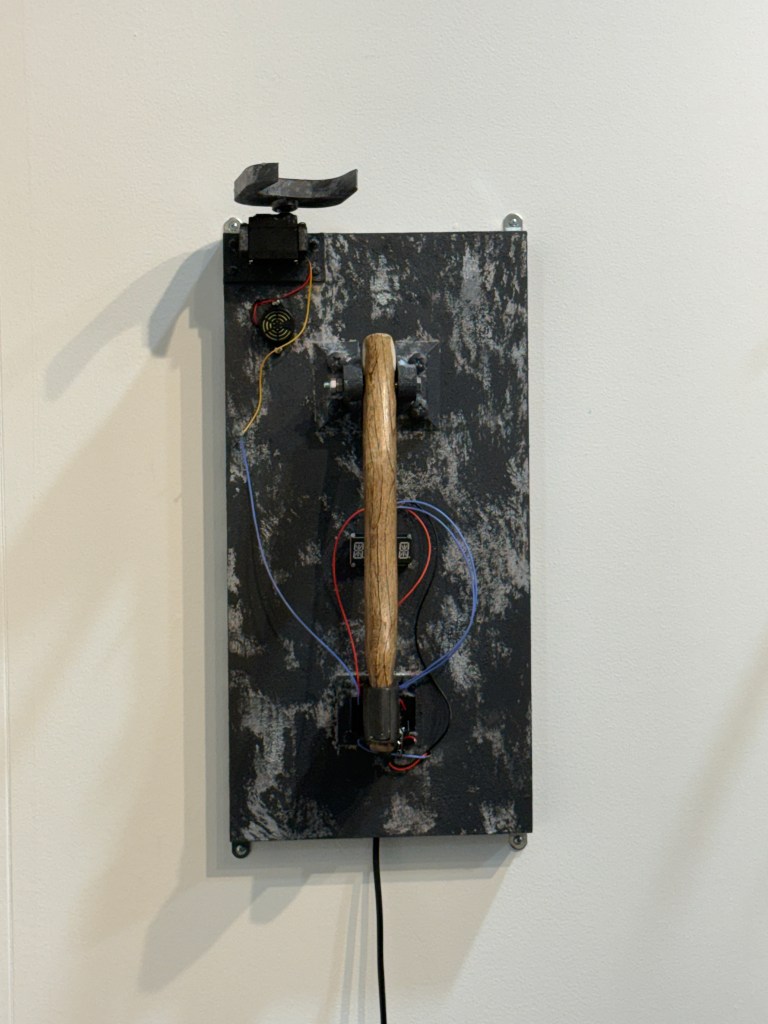
Within Future Fair, one of the most distinctive presentations was exonemo’s Hatch/et, shown at the NowHere booth. The work stood out not only for its mechanical structure but also for transforming computation into a visible, suspenseful, and destructive process. Six wall-mounted devices were installed across the booth. Each device consisted of a hatchet, a digital display, and an exposed electronic system. The computer inside each unit continuously attempted to brute-force a randomly generated passcode. Once the correct code was found, the mechanism would release the hatchet, allowing it to fall and damage or destroy the screen beneath it.
At first glance, the work appeared almost simple: a machine guesses numbers, and an axe waits above it. Yet this simplicity produced a strange tension between calculation and chance. Some devices contained shorter passcodes and could be solved quickly; others involved longer numerical sequences and could theoretically remain active for years. During my visit, I was told that one two-digit device had been solved almost immediately, causing the hatchet to fall in less than a minute, while a three-digit device lasted several minutes before triggering. The longest sequence, displayed on the leftmost unit, could, in theory, take years to resolve. But this duration was never guaranteed. The axe might fall years later, or in the next second.
This unstable temporality made randomness central to the experience of the work. In conversation, the artists emphasized randomness as a key idea, suggesting that contemporary viewers may need to learn to live with, and even enjoy, randomness rather than always trying to eliminate it. The installation did not simply visualize code as an invisible computational process; it gave randomness a physical consequence. A successful calculation became an act of destruction. The moment the machine reached its answer was also the moment it damaged itself.
This structure also complicated the apparent order of the installation. The devices were arranged according to the number of digits in their passcodes, moving from simpler to more difficult sequences. Yet the order of destruction was not necessarily linear. A shorter code was more likely to be solved quickly, but probability did not fully control the actual sequence of events. A longer code could, in principle, be solved unexpectedly early. In this sense, Hatch/et staged randomness on two levels: within each machine’s search for the correct code, and across the installation as a whole, where the order of collapse could not be fully predicted.
The work also opened onto broader questions about AI and computational culture. In discussing the piece, the artists linked randomness to the operations of AI, suggesting that artificial intelligence can also be understood as a combination of probabilistic processes. This does not mean that Hatch/et is simply an “AI artwork” in a narrow sense. Rather, it offers a more basic meditation on computation itself: the ways machines search, guess, calculate, fail, and sometimes produce irreversible outcomes. The exposed wires, screens, axes, and damaged surfaces made this process unusually material. Computation was not hidden behind a polished interface; it appeared as a fragile apparatus waiting for its own interruption.
The artists also showed me documentation of a larger work in the same series that has not yet been exhibited. In that version, a stone is suspended above a chair, with a much longer numerical system beneath it. This extension suggests that Hatch/et is not only a single installation but part of an expanding inquiry into chance, violence, duration, and machine agency. At Future Fair, however, the smaller wall-mounted units already made the central idea forceful: in a culture increasingly shaped by algorithms and predictive systems, randomness remains not a technical error, but a condition that structures how machines and humans encounter the future.
Header image source: https://www.dailyartmagazine.com/new-york-art-week-2026-12-best-artworks-highlights/
 Expressive AI
Leave a comment