by Marina Hassapopoulou <mh193@nyu.edu>
In the midst of Tokyo’s AI Week, the most compelling concept I encountered had nothing to do with AI (at least not in a technical sense). And it was SO refreshing to use technology as a proxy for experiencing something profoundly human, especially given the current impetus to AI-fy everything. This was a reminder that AI is not — and should not be — the be-all and end-all of our so-called technological evolution (which is often a guise for the cultural de-volution that occurs simultaneously).
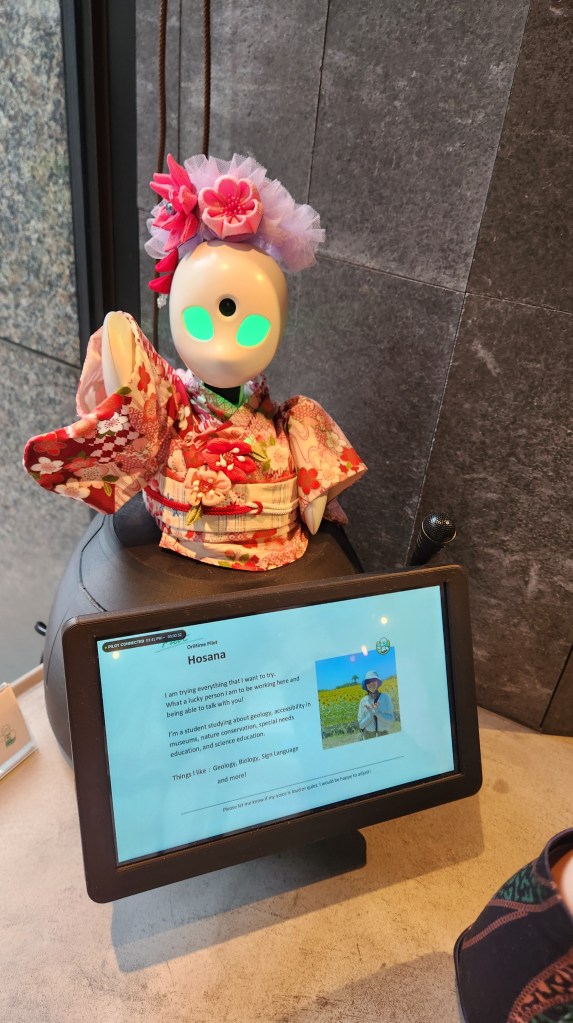
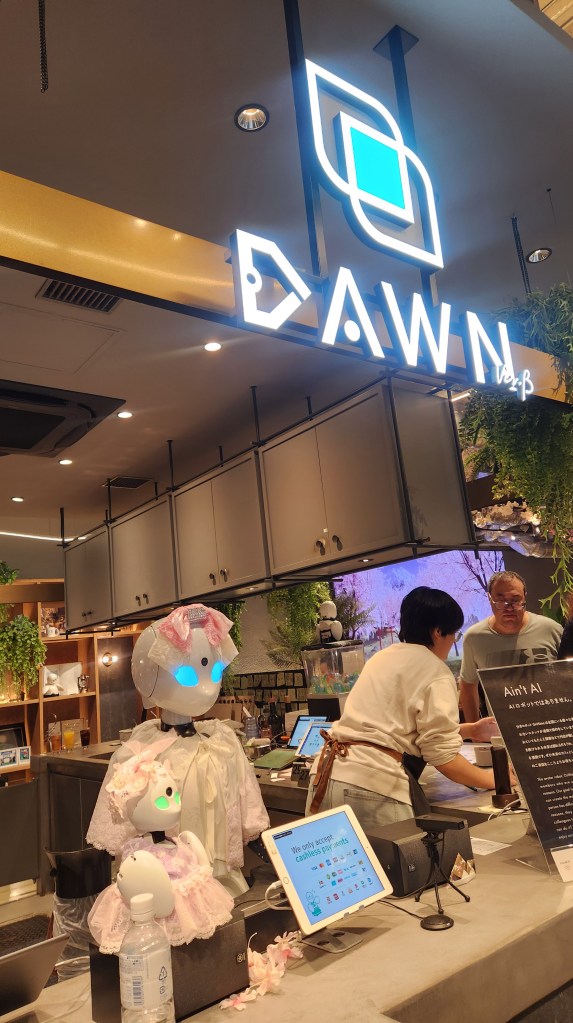
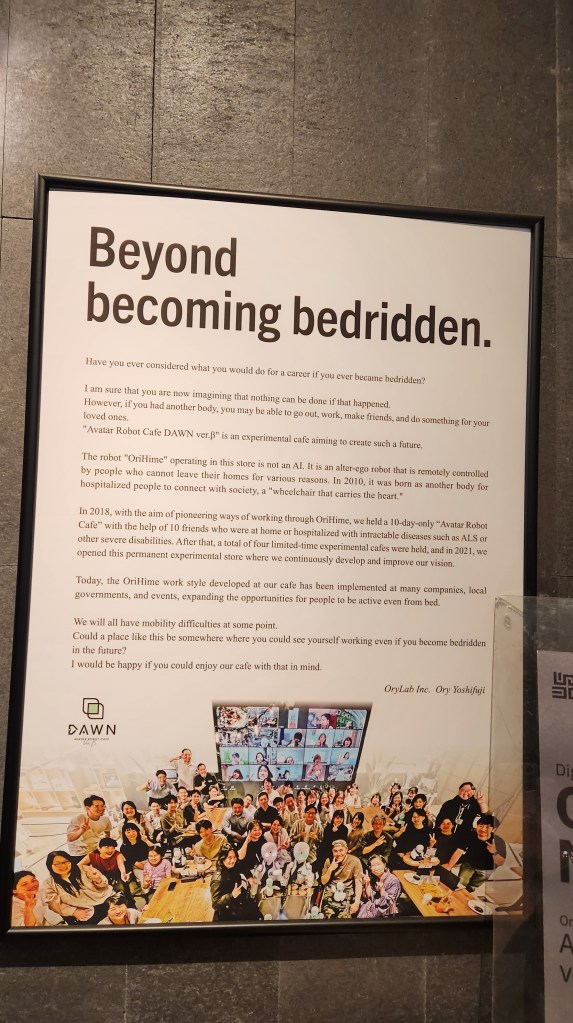
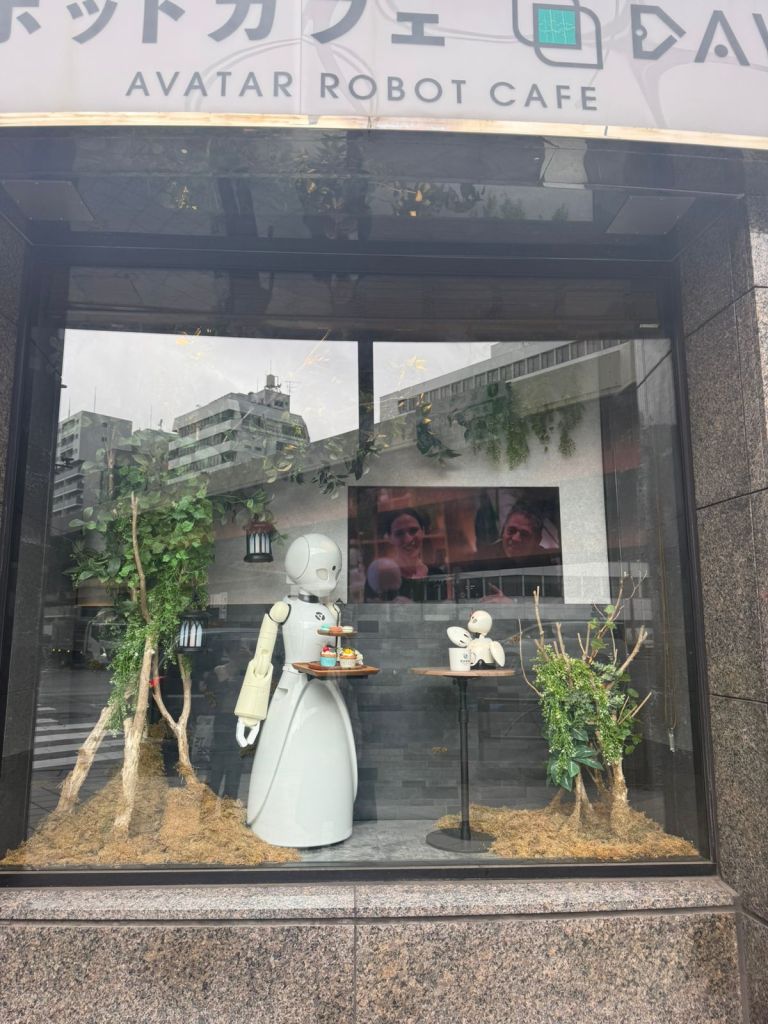
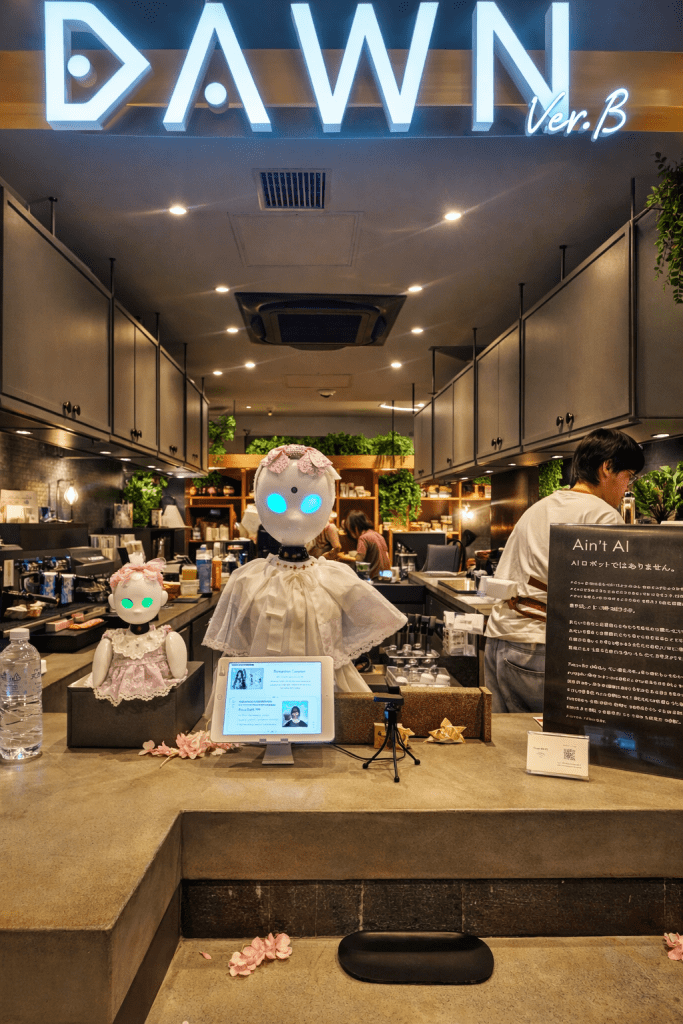
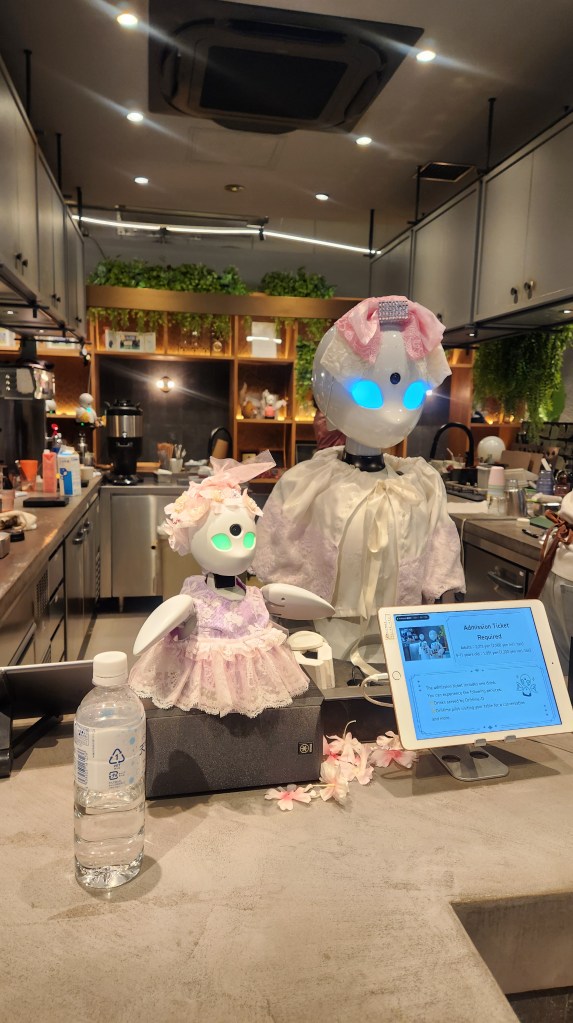
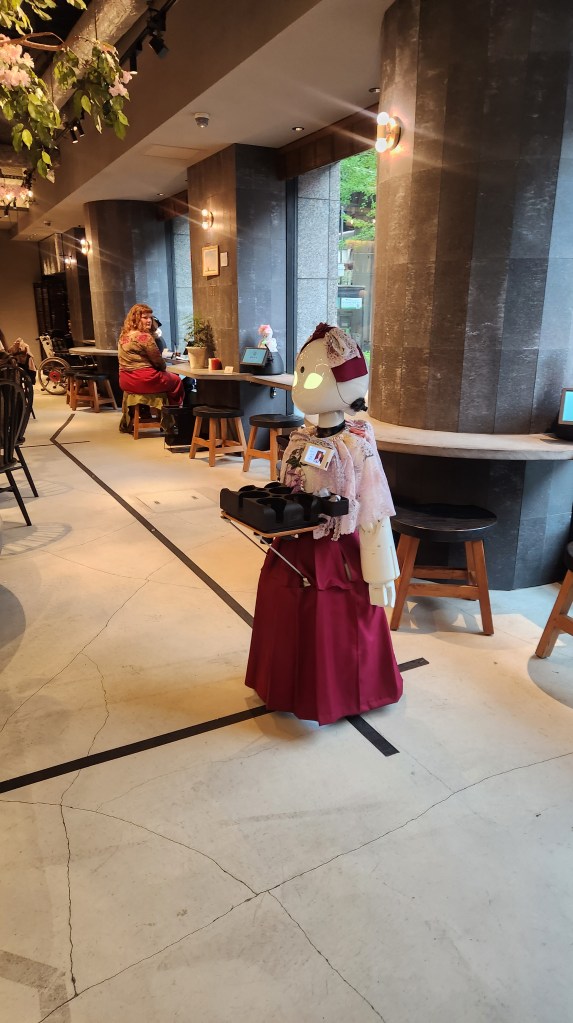
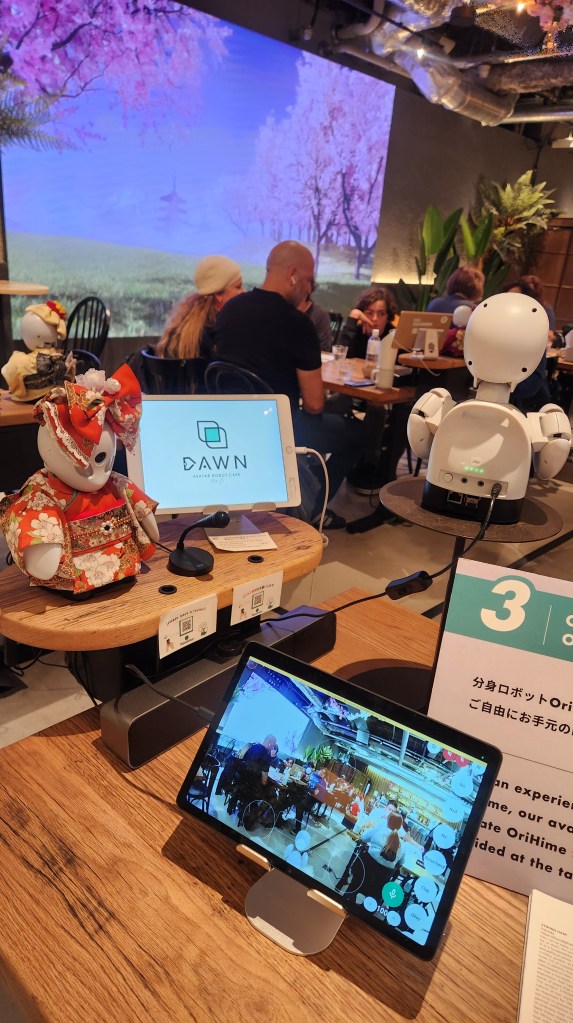
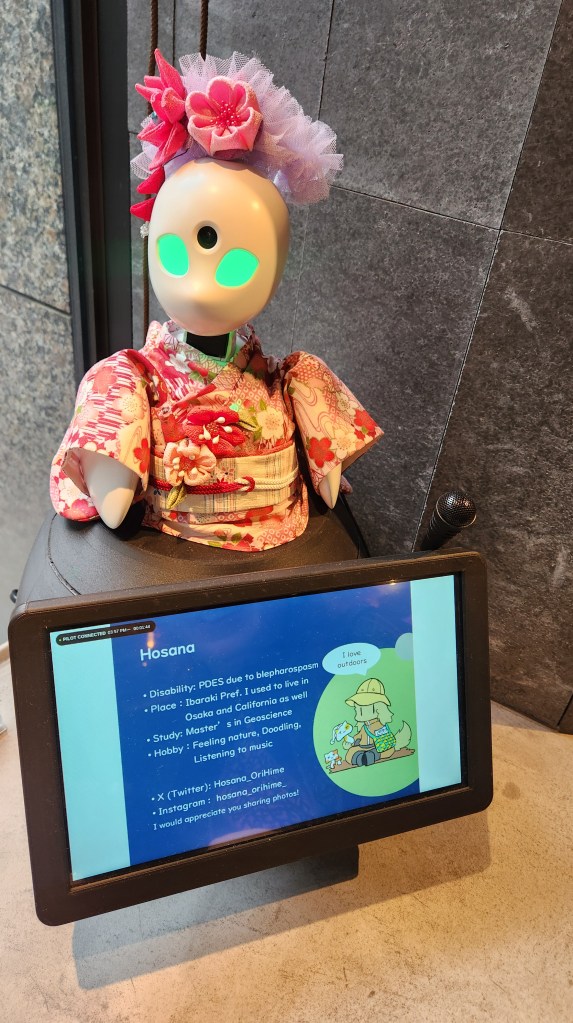
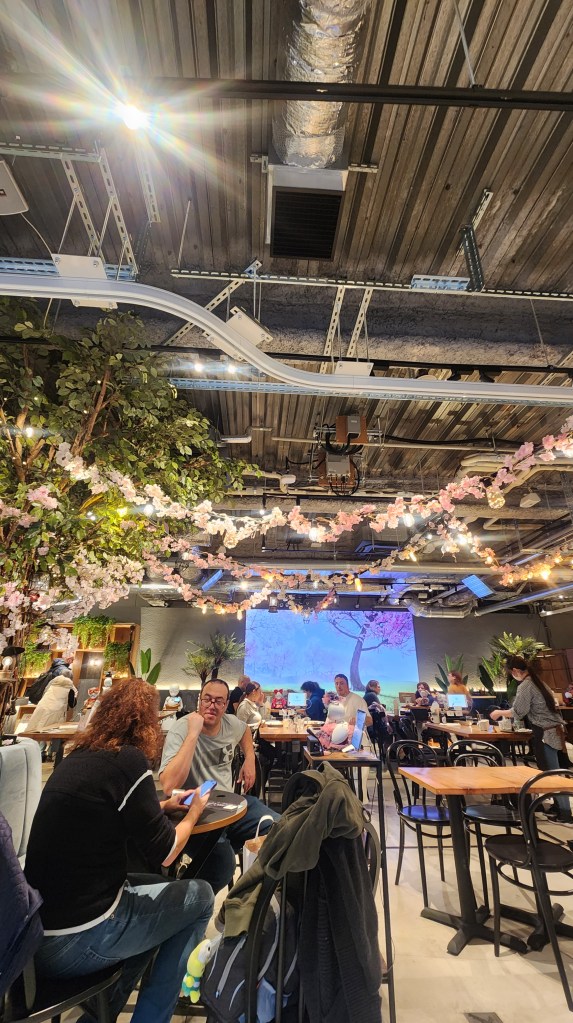
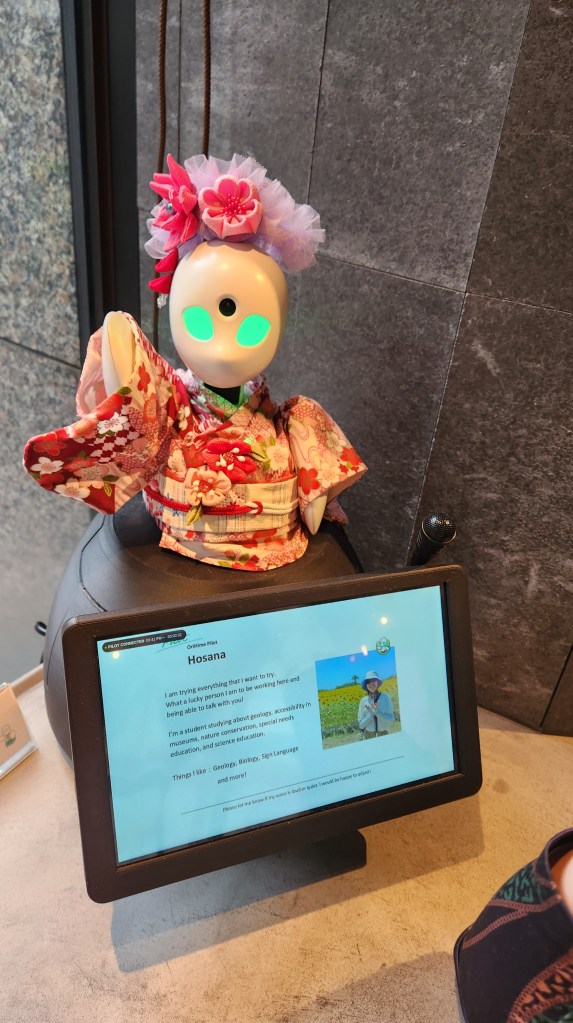
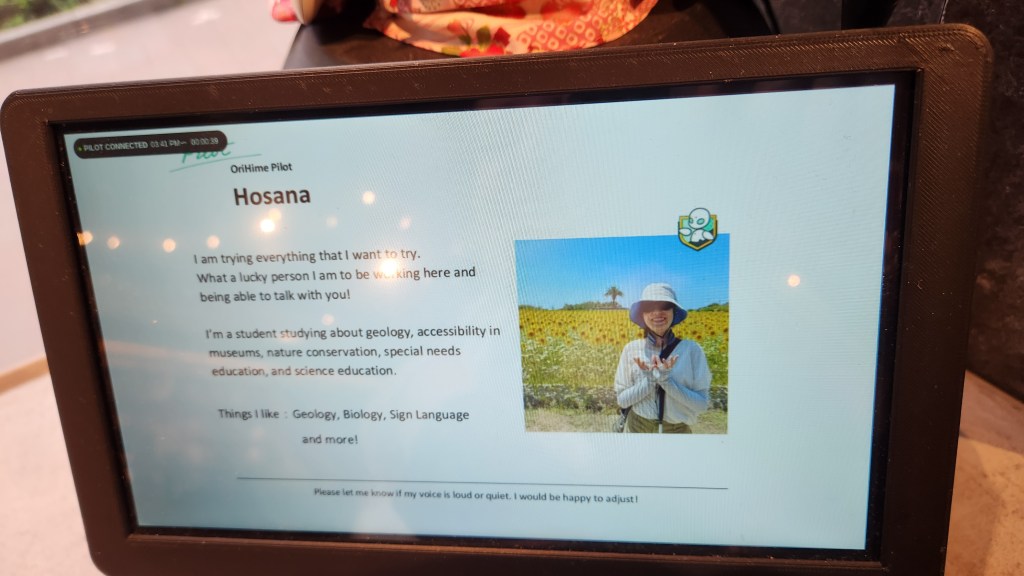
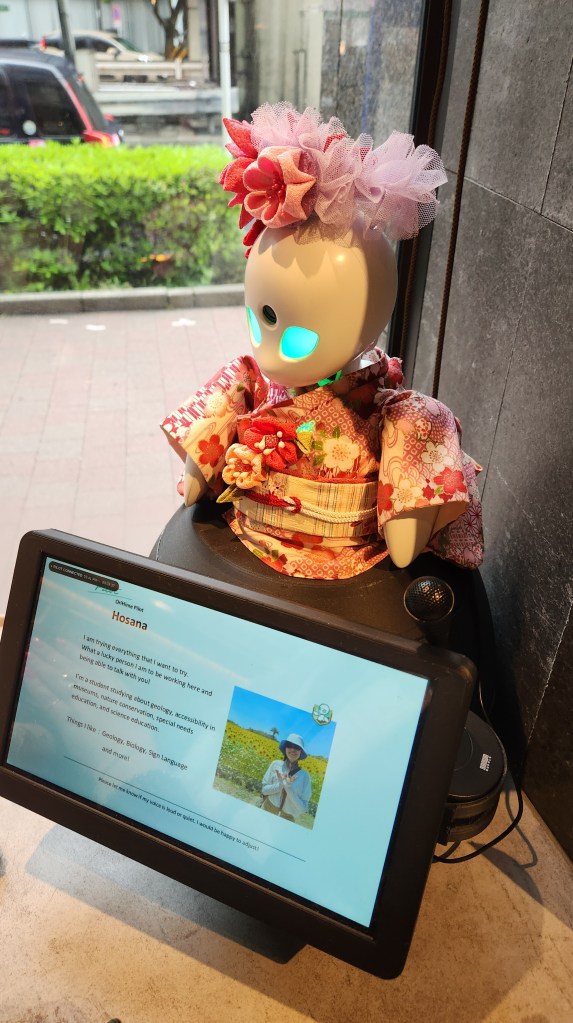
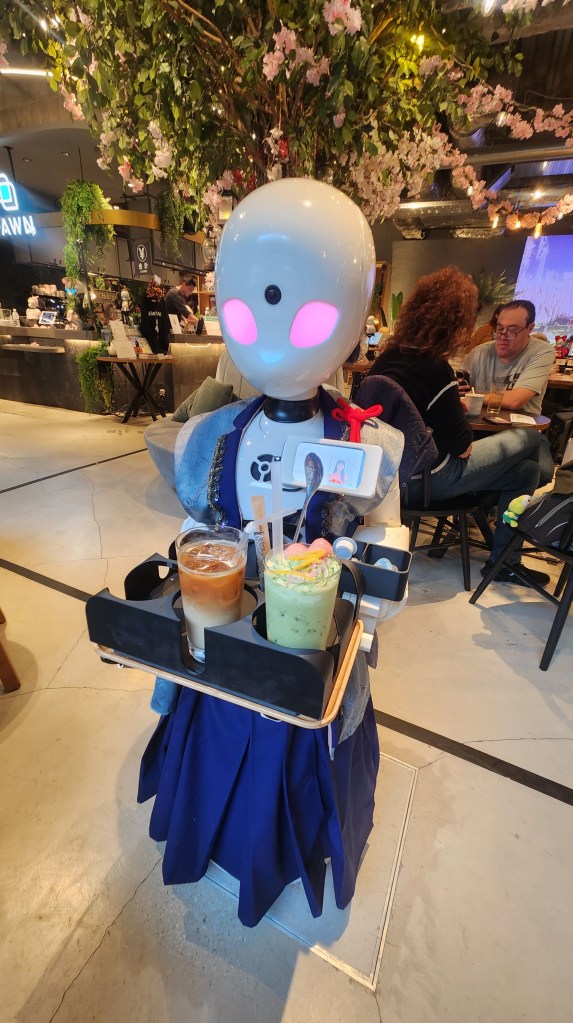
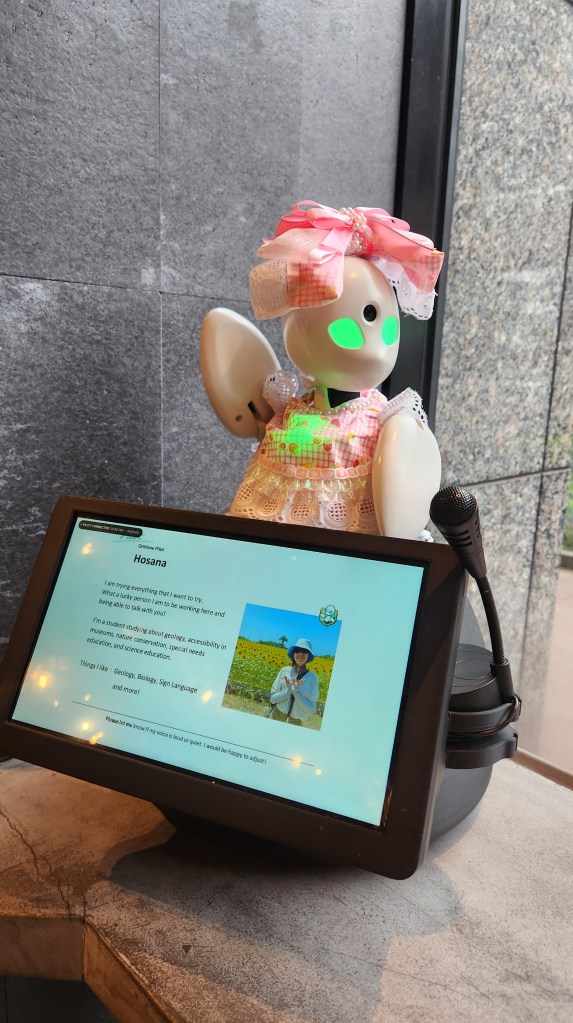
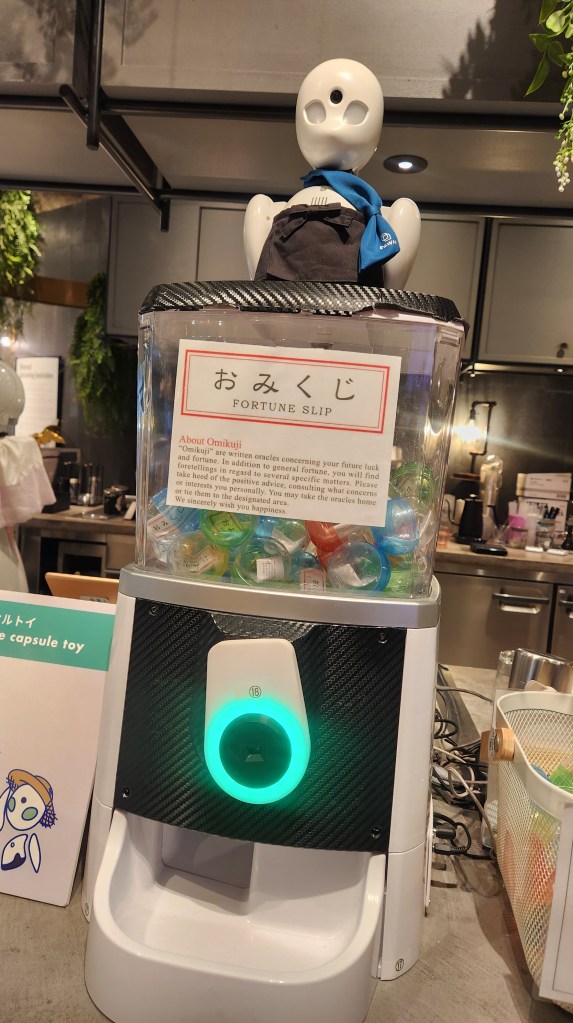
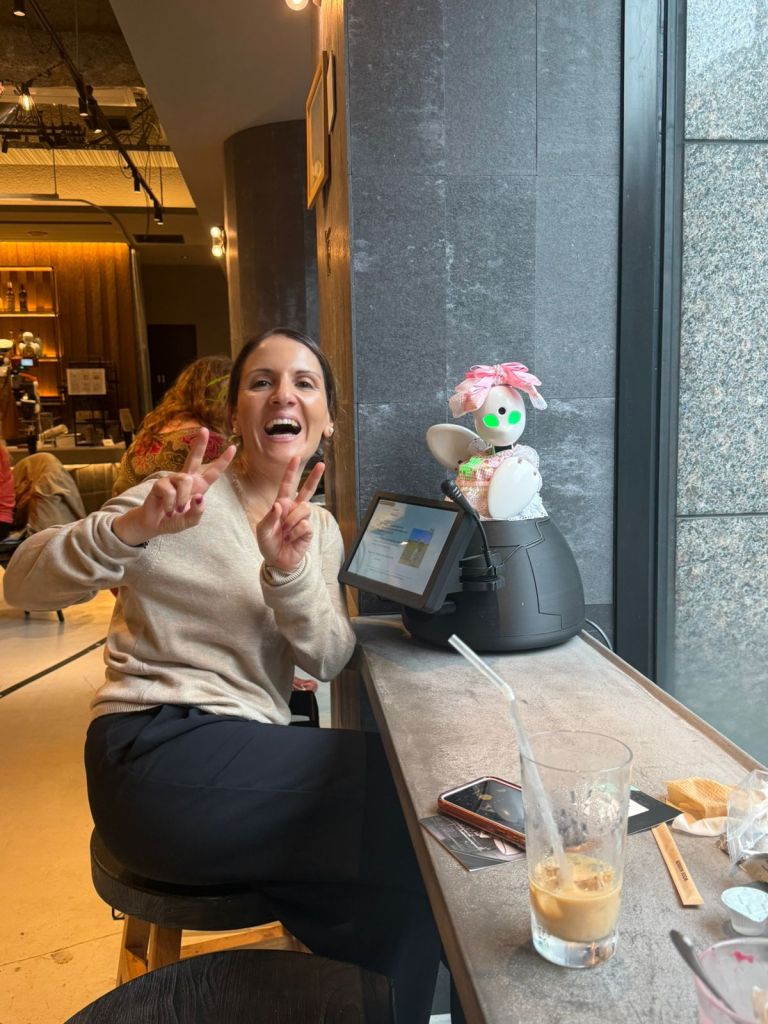
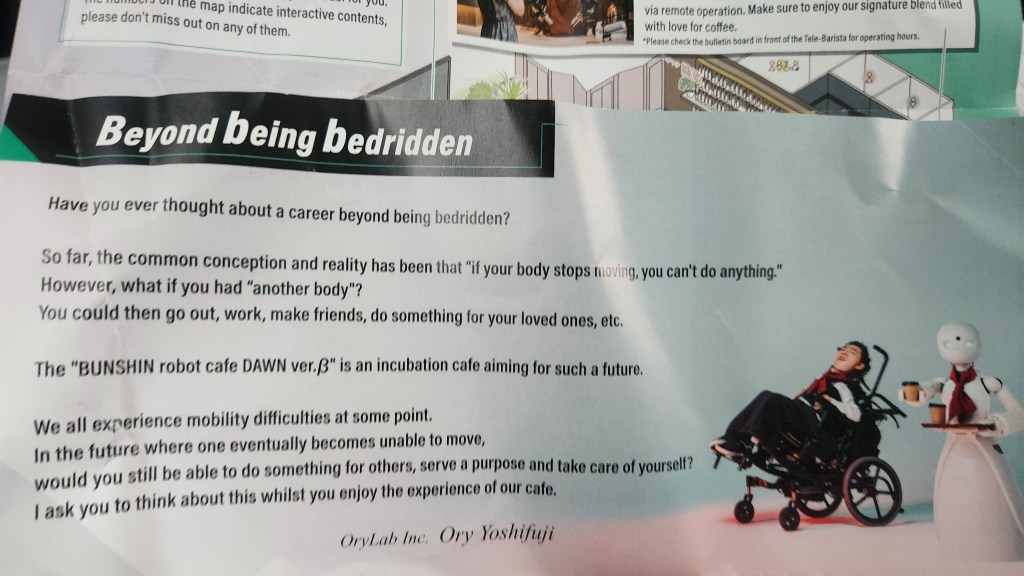
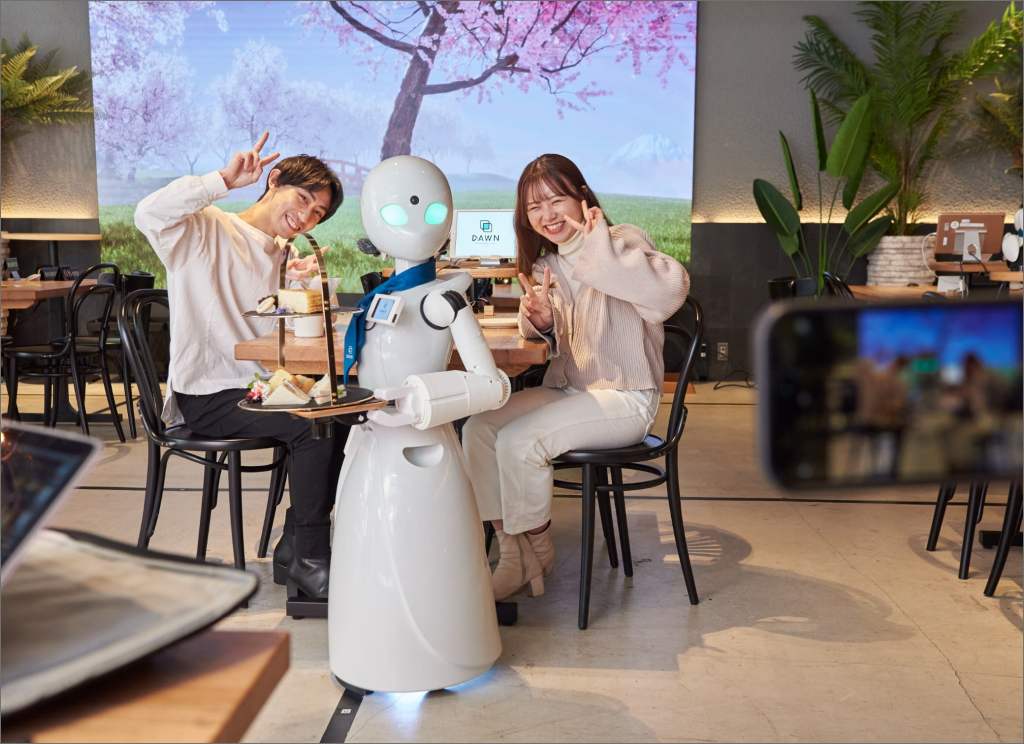
At the DAWN Bunshin (Avatar) Robot Café, people who have difficulty leaving their homes due to illness, disability, or other constraints work remotely by operating robotic avatars that serve customers in a physical café. What is particularly striking about this model is not only how it mediates presence, but how it reconfigures labor. Robots here are not replacing workers, they are extending labor and participation in ways that benefit often marginalized sectors of society. This system creates conditions under which individuals who might otherwise be excluded from the workforce are able to participate in it in meaningful ways. Labor is not automated but, instead, redistributed across bodies, interfaces, and a spectrum of social-virtual environments. The café does not reduce the need for human involvement: it makes different forms of human engagement and social interaction possible.
This feels increasingly significant in the context of how AI is often framed. Much of the current discourse assumes that technological progress is synonymous with automation, and that automation leads, inevitably, to the reduction of human labor. Whether framed optimistically or critically, the underlying trajectory tends to remain deterministically the same. What is less frequently considered are models that move in a different direction altogether: systems that use technology as a way of boosting human involvement and agency, rather than dis/replacing it.
The avatar robot café does not simply stand apart from AI: it offers a way of thinking about technology that does not begin with automation and optimization as its primary objectives. This alternative approach to what we now narrowly only associate with AI foregrounds, instead, participation, mediation, and the redistribution of human agency. The mechanical is used to humanize interaction, rather than the other way around.
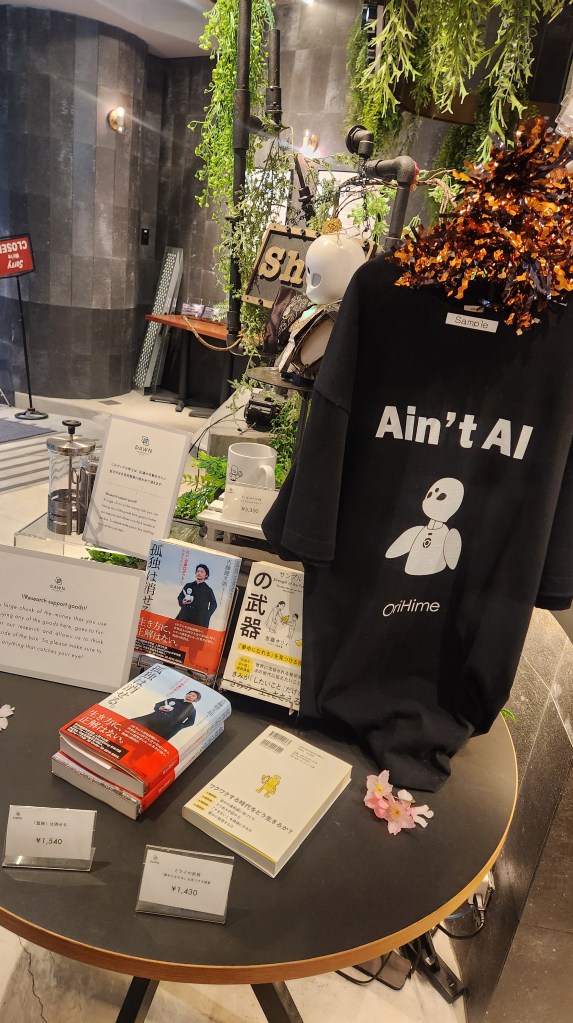
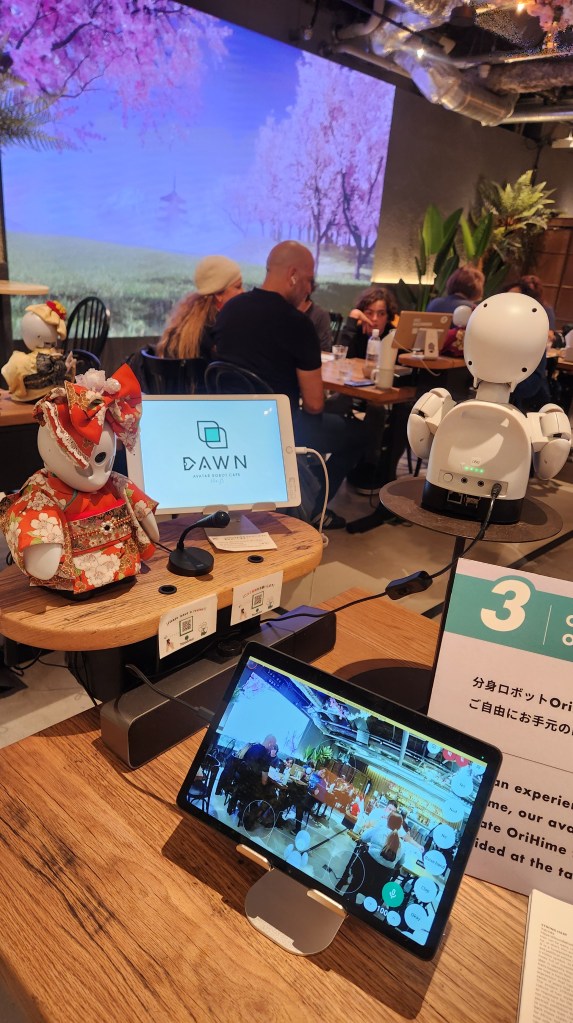
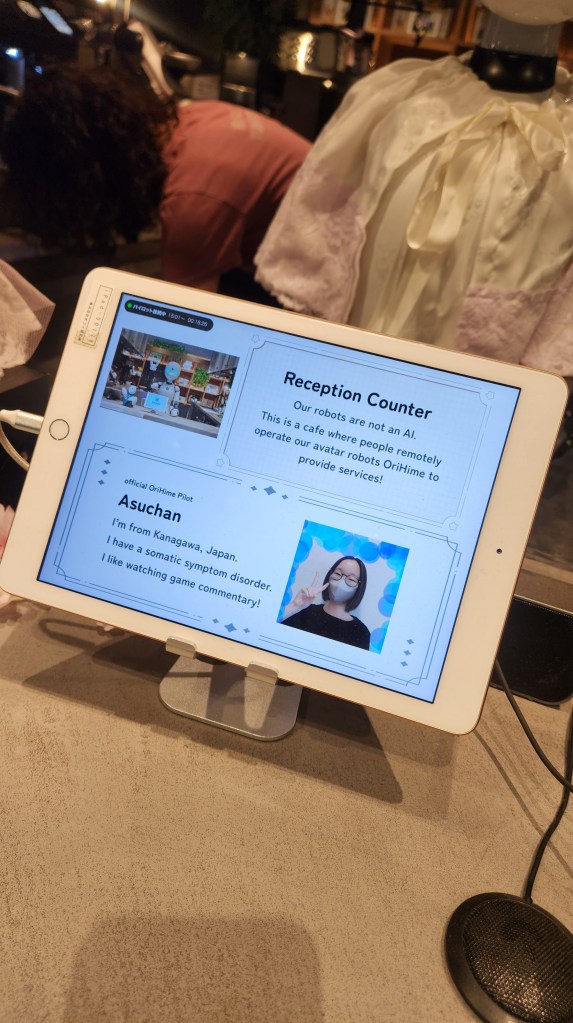
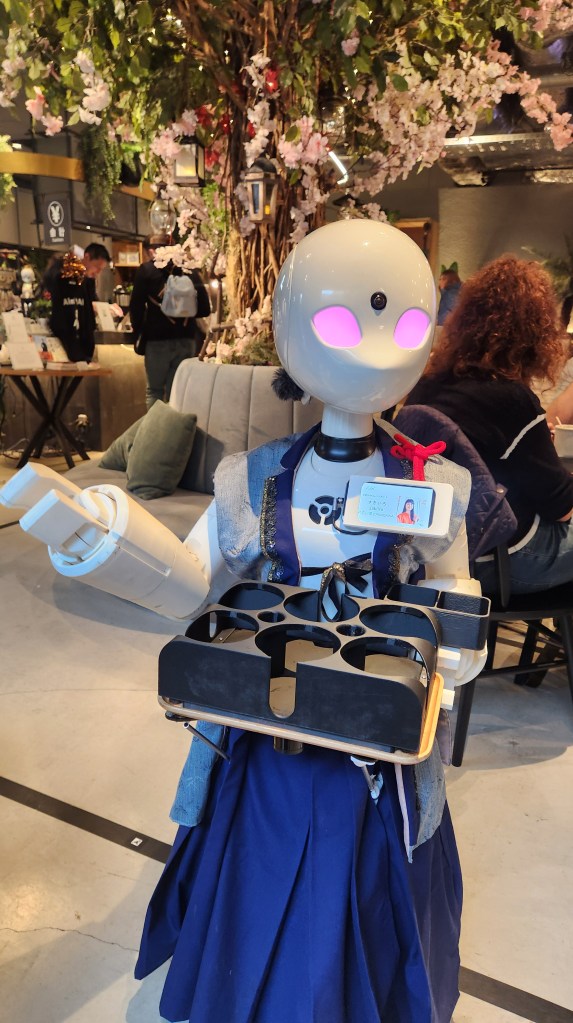
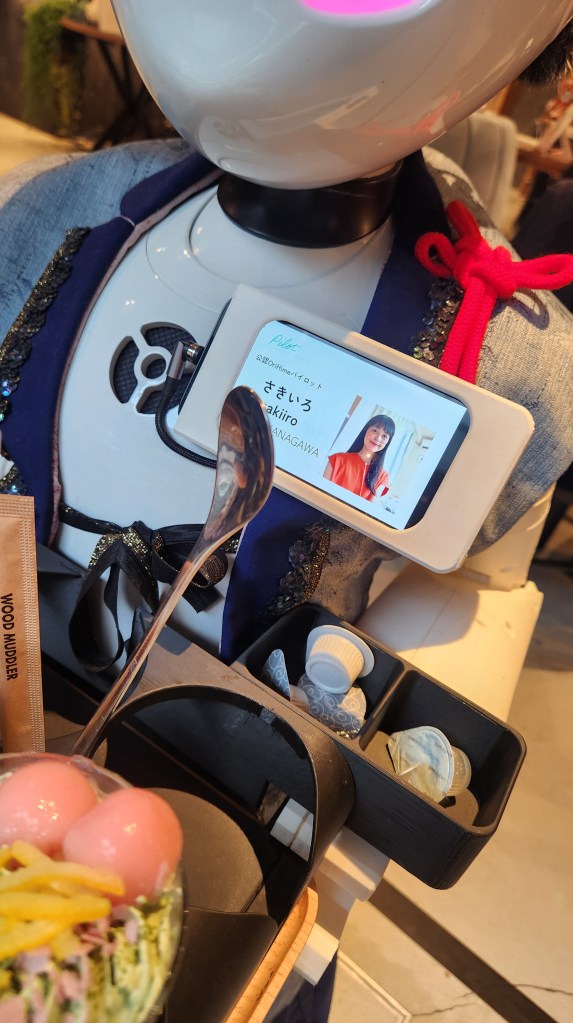
Much of the discourse around AI is organized around a familiar dichotomy: systems that either extend human capability to its limits, or systems that render human labor increasingly unnecessary. Both assume a trajectory toward autonomy — either human or machinic. But, as I wrote in my book on the ethics of media participation, polarized approaches to technology and participation tend to exacerbate sociocultural fragmentation. What is needed is an in-between approach. Therefore, what is less spotlighted in polarized all-or-nothing debates on AI’s impact are concepts that do not follow one of the two typical trajectories.
The DAWN café does not automate interaction, it reconfigures it. Presence is neither immediate nor simulated, but distributed across interfaces, bodies, and the continuum of social-virtual environments. The end goal is not efficiency or automation, but a different configuration of participation that gives us hope for a <productive> technologically mediated future.
In this sense, AI becomes less a specific technology and more a conceptual horizon that has come to define what we expect systems to do. AI as a concept shapes the kinds of futures we imagine, often narrowing them to questions of efficiency, scale, and human substitution (or, “optimization” — same sh*t).
What would it mean to treat that horizon as only one possibility among many?
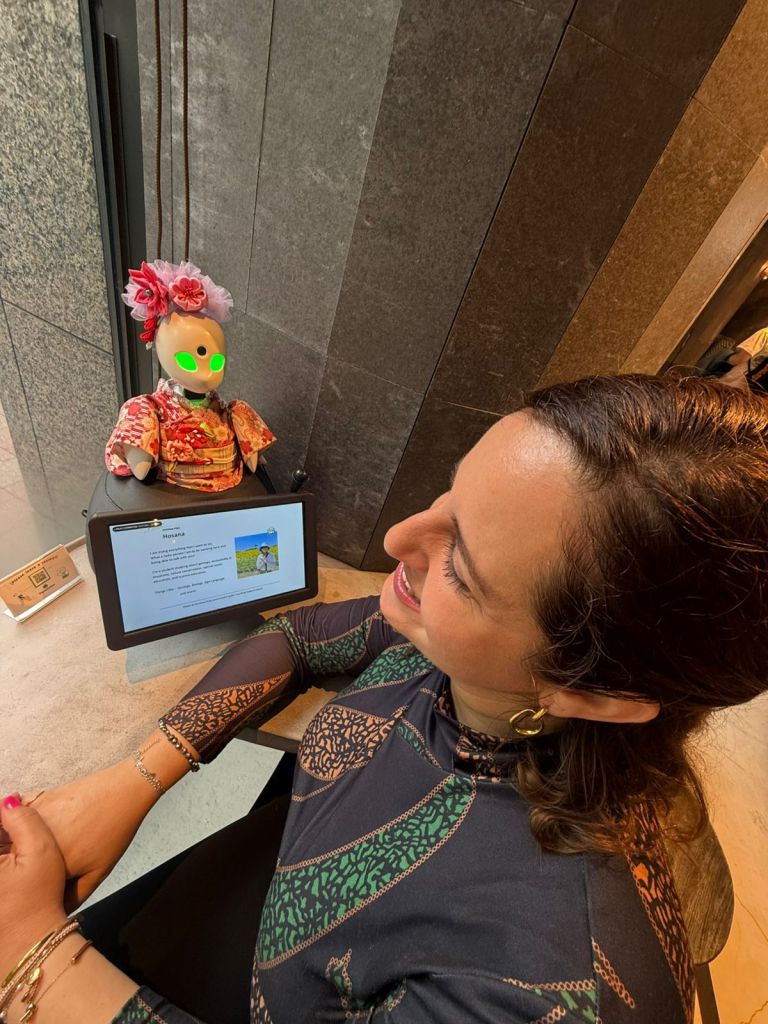
In-between spaces such as that offered by this avatar robot café suggest that alternative trajectories are not only conceivable, but already in operation. They do not eliminate labor, but instead use technology to reconfigure it and make it more inclusive and socially meaningful. They do not simulate human presence: they extend it and amplify it. Beyond its futuristic concept and sci-fi undertones, the experience I had at DAWN café was profoundly human.
The question, then, is not only how far automation can go, but what other models we might choose to develop if the goal were not to replace human participation, but to expand its possibilities. What kinds of systems would emerge if social participation and human interaction, rather than automation, were treated as the starting point?
My point is: not all technological trajectories must lead toward AI as an endpoint.
Some remain oriented around the redistribution of agency across human and beyond-human entities, and the amplification of social interaction and cultural impact, rather than abstraction and automation.
What would it mean to take alternative models like this avatar café seriously, not as exceptions, but as viable models for how technology might be designed to benefit society at large? Could more humanly inclusive approaches to a tech-forward future even resolve — or at least decrease– certain inequalities in socioeconomic participation that have less to do with technology and more to do with how our society categorizes bodies and minds based on outdated Cartesian and Vitruvian paradigms? With the current growing rush to AI-fy everything, imagining alternative uses of technology to resolve, instead of exacerbate, inequalities seems more and more utopian. But at least viable examples such as this avatar café show us that there are other ways forward, and offer a powerful critique and reconsideration of how labor is defined in AI and beyond-AI societies.
Read more about the concept behind BUNSHIN Robot Café here <<
It is worth nothing that the café can be considered a bit touristy and overpriced, but I felt it was all for a good cause. I was not able to find out how much employees (remote and in-person) are compensated, but was able to have some lengthy discussions with the remote workers about other aspects related to their work and satisfaction level. I also participated in a sign language lesson, and in Japanese-Greek language exchange with one of the human robots – thank you Hosana!
Watch the video playlist below (keep watching to jump to the next video):
#ArtificialIntelligence #Robotics #DigitalHumanities #TechEthics #FutureOfWork #Inclusion #MediaArt
 Expressive AI
Leave a comment