by Clone Wen
I went to the Leslie-Lohman Museum of Art in the Spring rain. On a Saturday afternoon, I was the only one there, maybe because of the weather, maybe because I arrived early. The Leslie-Lohman Museum of Art sits at 26 Wooster Street in SoHo, dedicated to LGBTQ+ art.
Shu Lea Cheang’s installation, LOVER LOVE (2026) is one of three running concurrently, tucked behind a black curtain. There is no black box / white cube here. Only a black box with curtains and another purple cube, and that color articulates the queerness of the space.
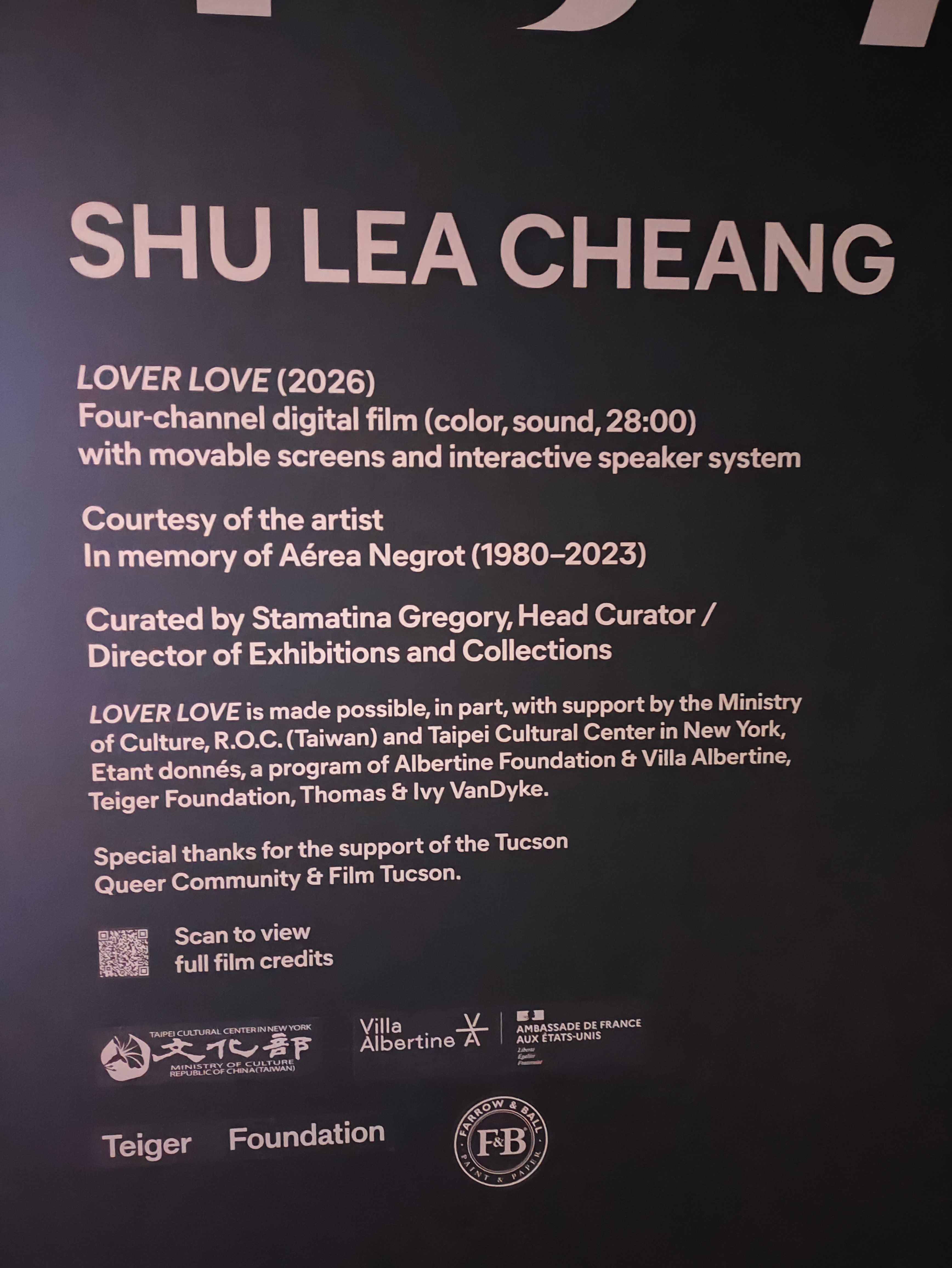
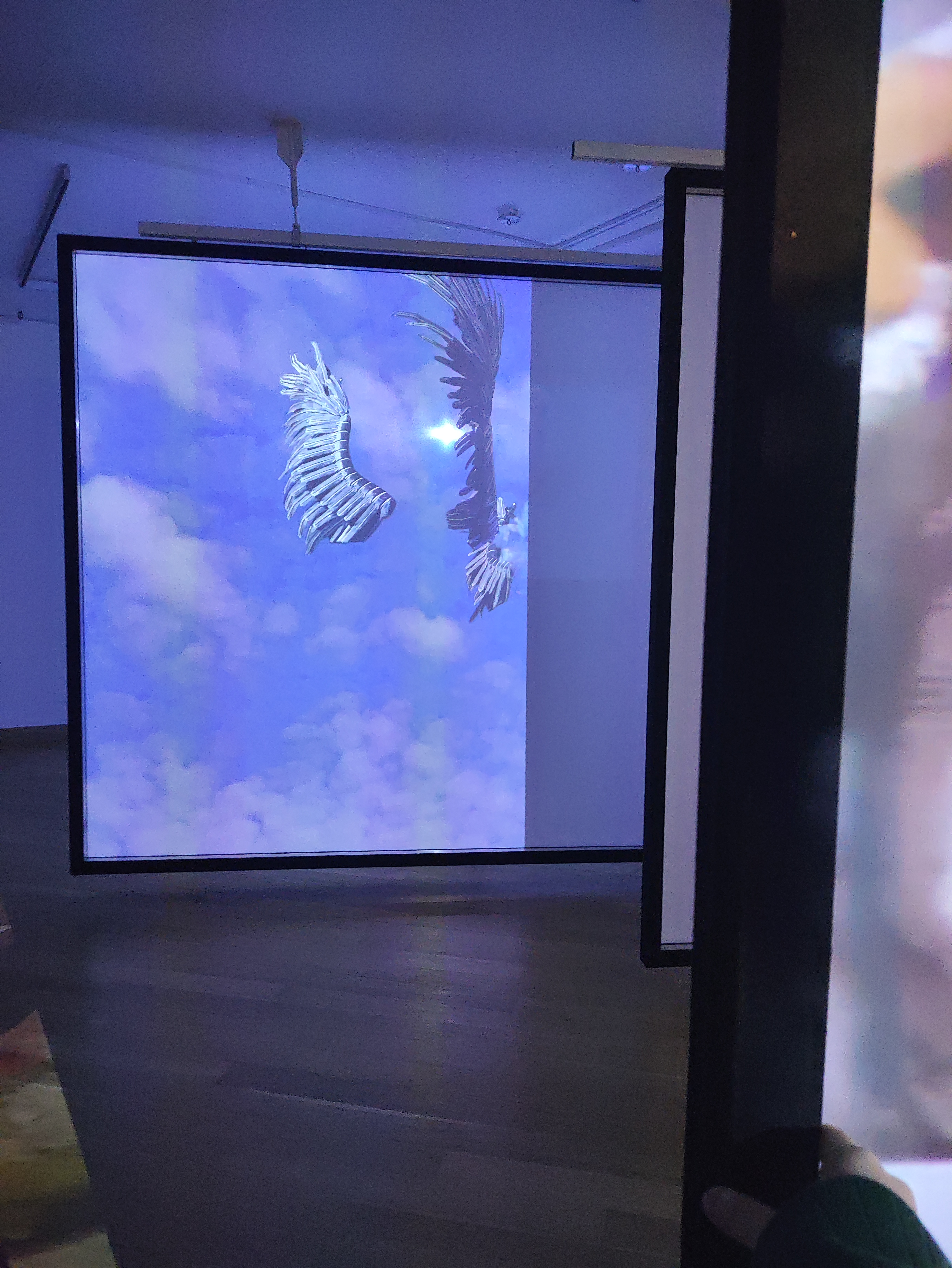
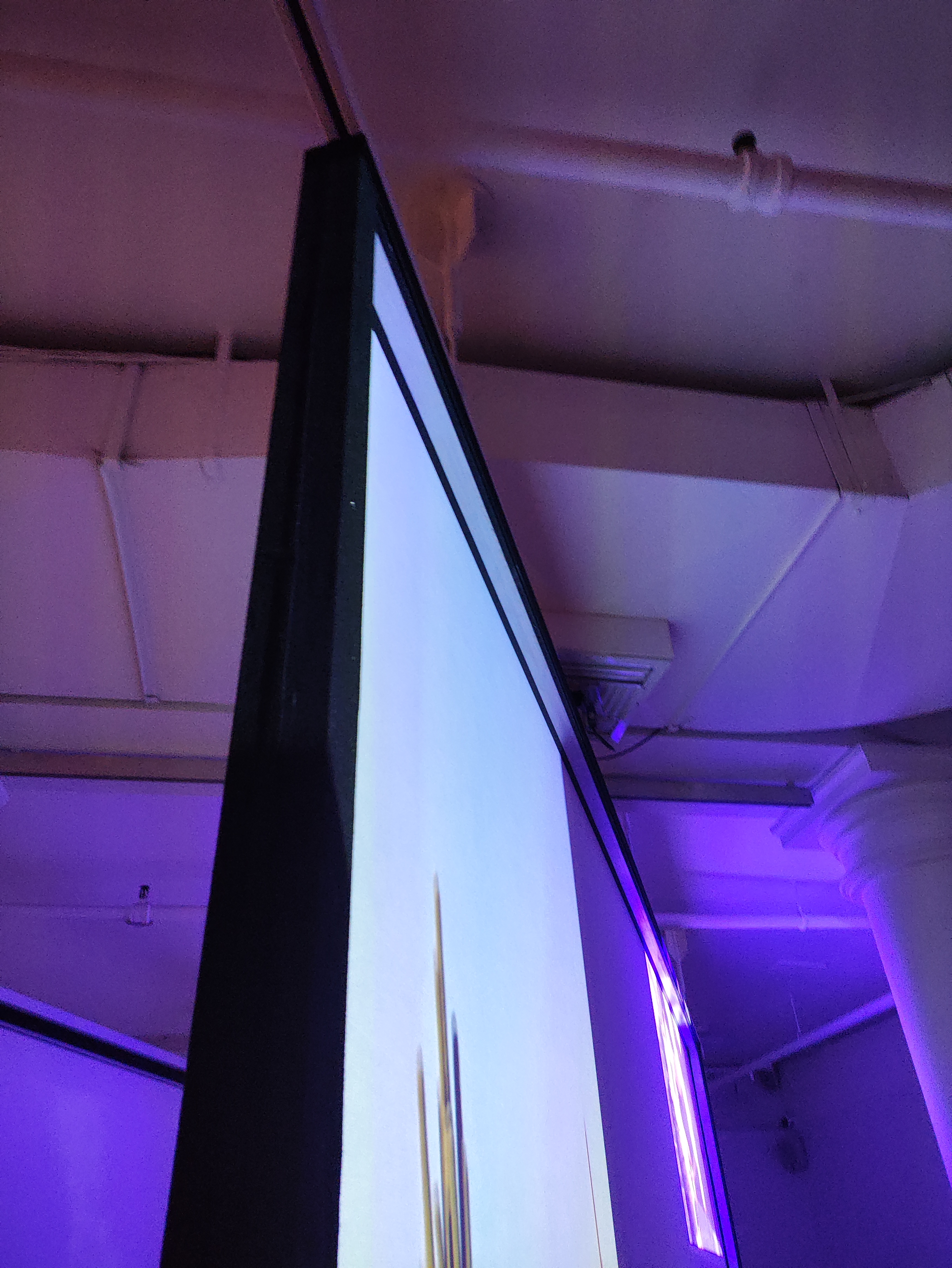
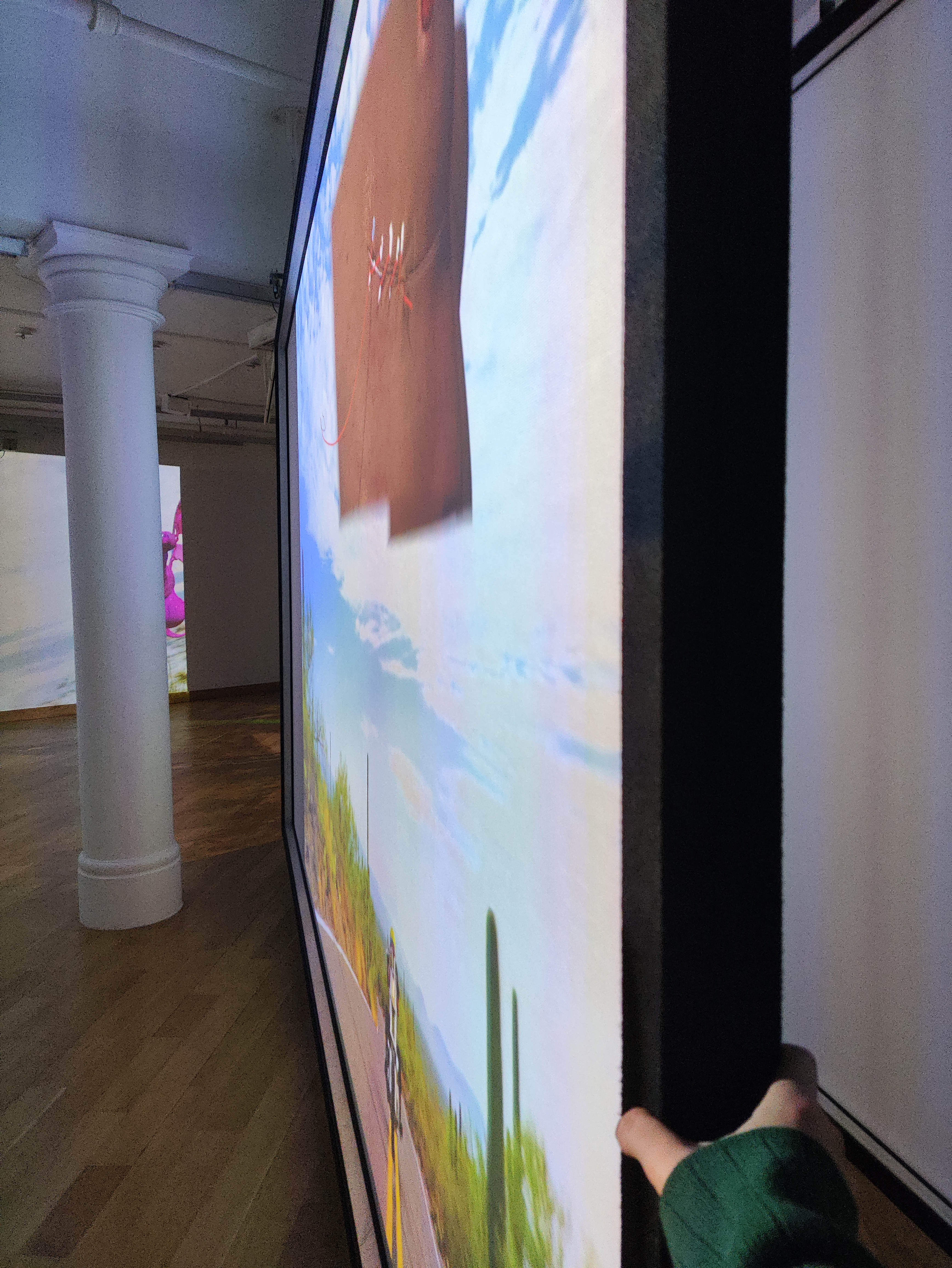
To understand LOVER LOVE, you have to place it on the timeline Shu Lea Cheang draws for herself.
In 2009, at Hangar Media Lab in Barcelona, she declared her entry into “viral love, biohack.” Everything since (e.g., 3x3x6 inVenice 2019, UKI in 2023) extends that virus line. In a previous talk she said: “I felt my cycle of becoming virus finished in 2023, when UKI was released.”
Two things converge in 2023. One is the closing of an artistic cycle. The other is the death of Aérea Negrot, the Berlin-based musician who was Cheang’s go-to composer and dear friend, who jumped from the window of her third-floor apartment. Aérea Negrot was the sonic author of Cheang’s entire virus line. The cycle did not close cleanly. It was severed by the death of a long-term collaborator. Cheang said: “I decided to do something about trans fragility.” That something is LOVER LOVE.
Virus is replicable, fermentation is the duration of processing. Virus bursts open suddenly, fermentation matures slowly. Near the end of that talk, she added: “Maybe I have to bring the virus back into negotiation with the body.” LOVER LOVE sits exactly on that point of negotiation.
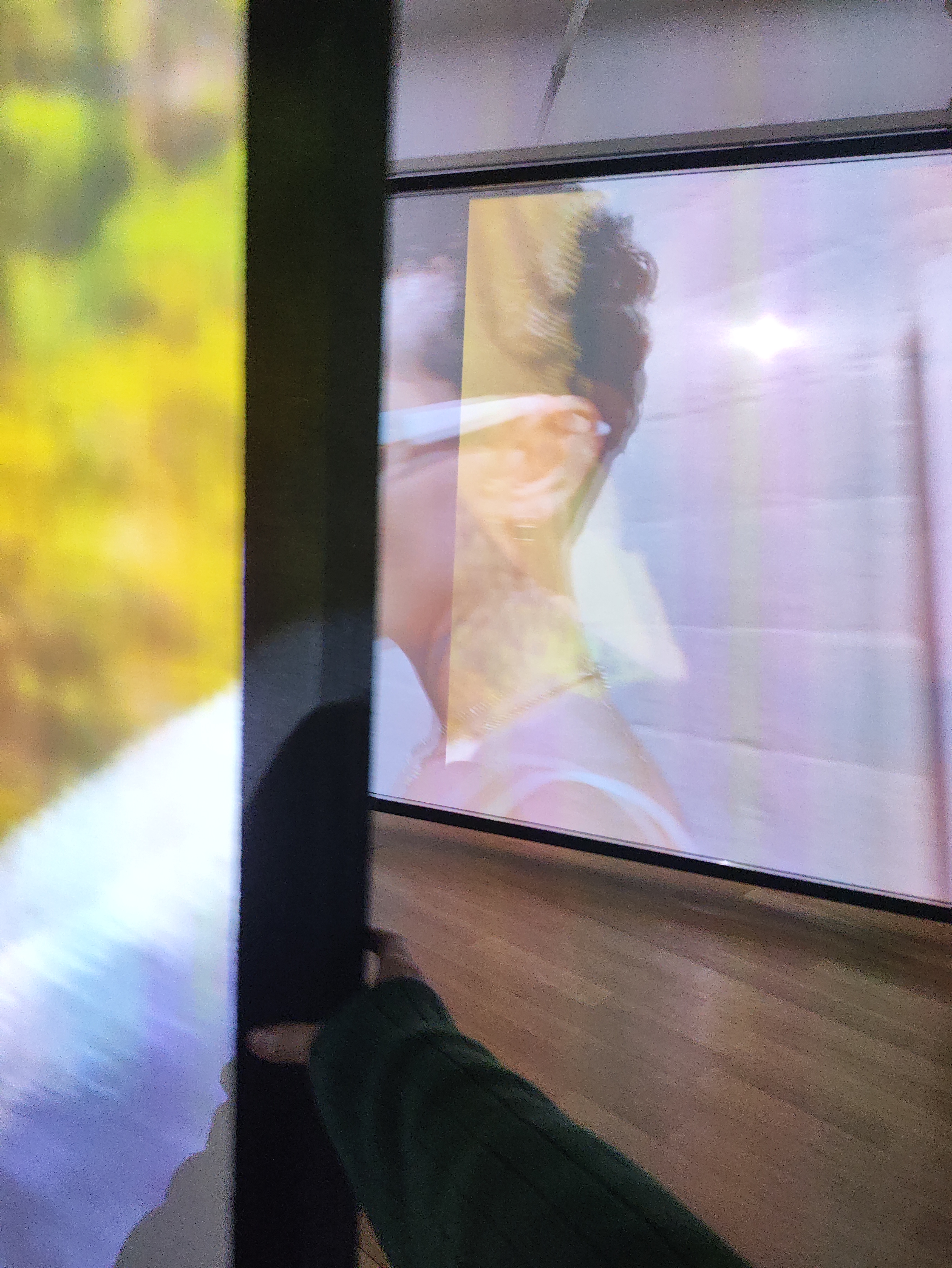
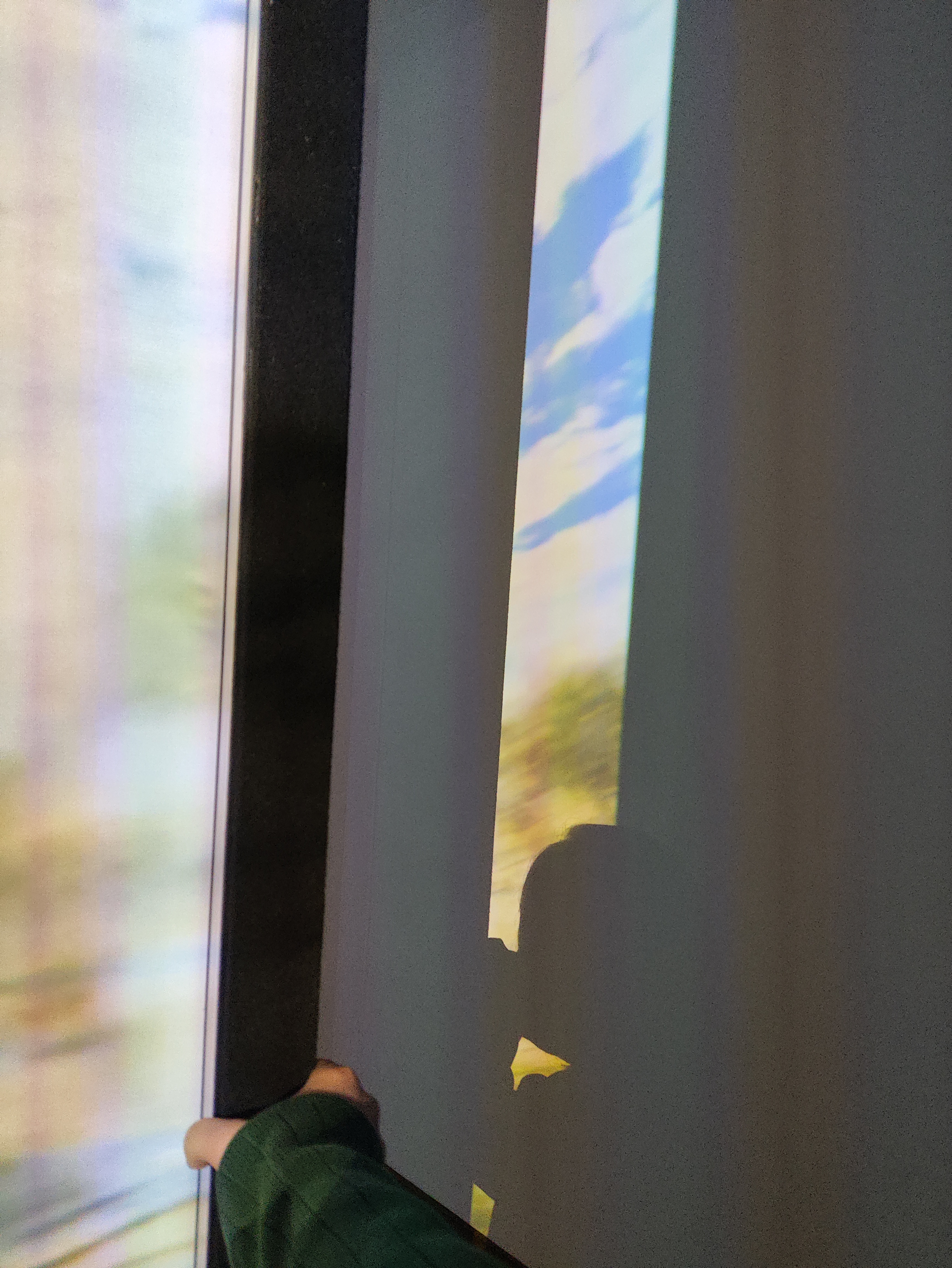
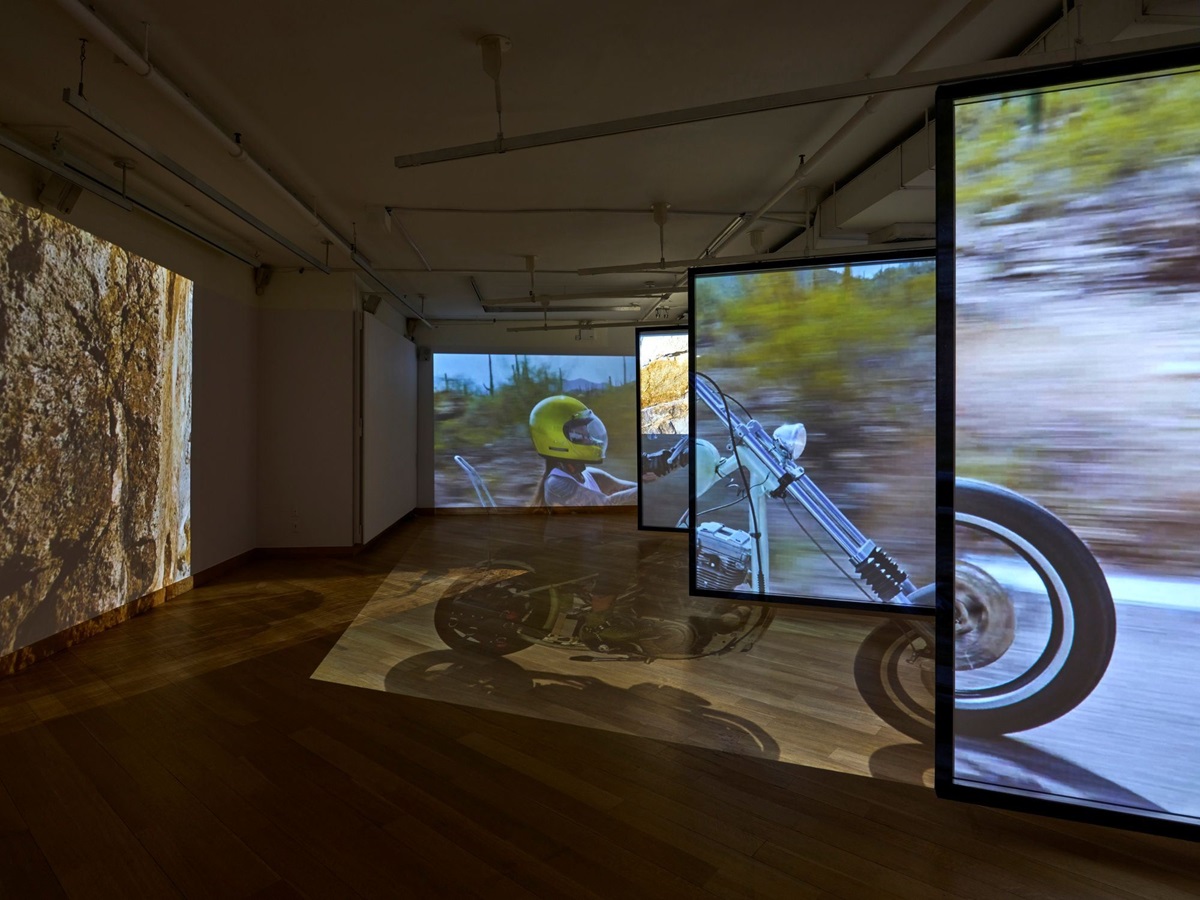
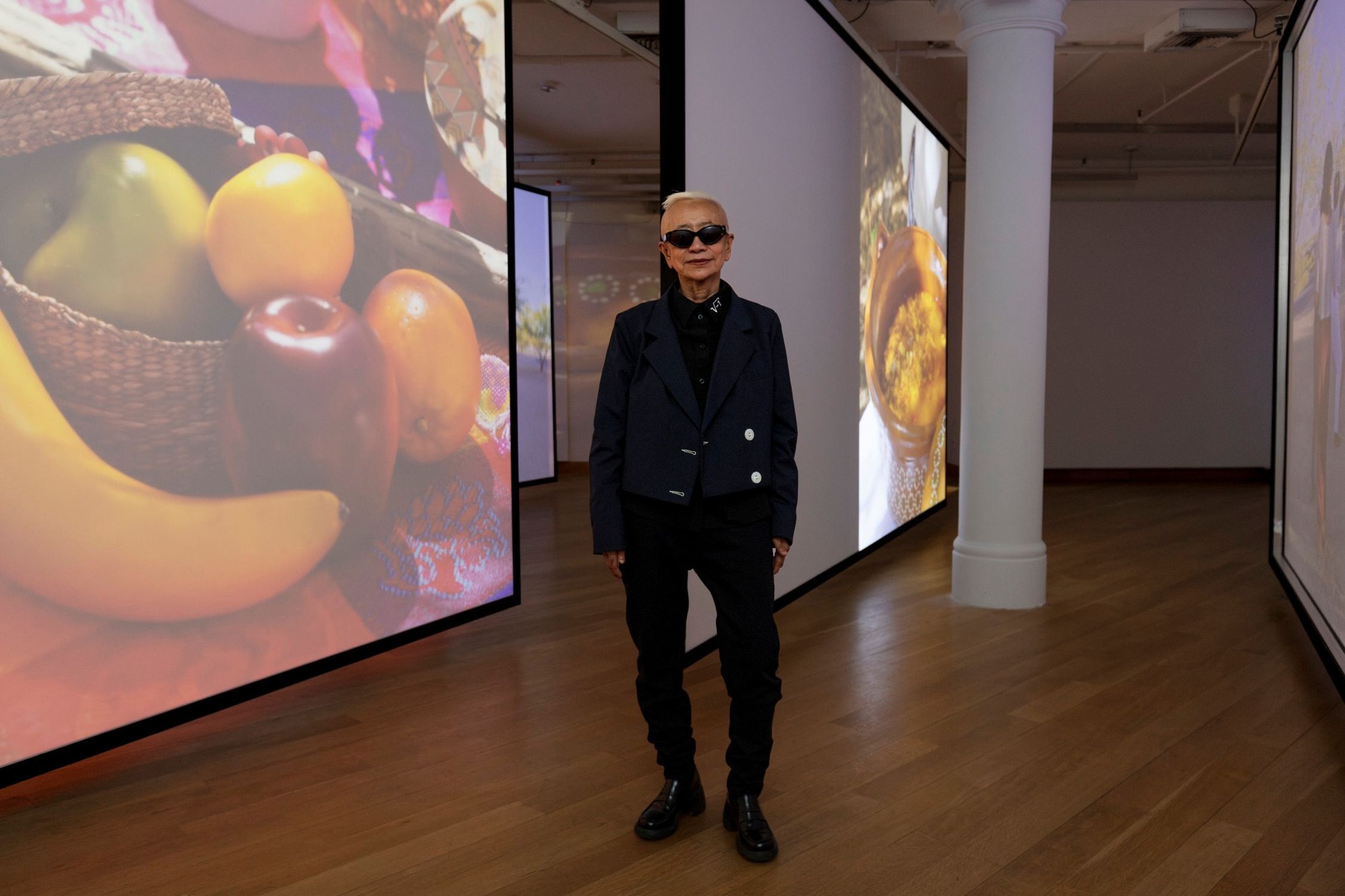
The four main screens really do move. They run on ceiling tracks, gliding like trains overhead. You push, the sensors detect the displacement, a fragment of Aérea Negrot’s song is triggered. To keep hearing the song, I kept pushing the screen back and forth along the track. Only when you push does the music start, a stretch of unidentified jazz by Aérea Negrot. When you stop pushing, it stops.
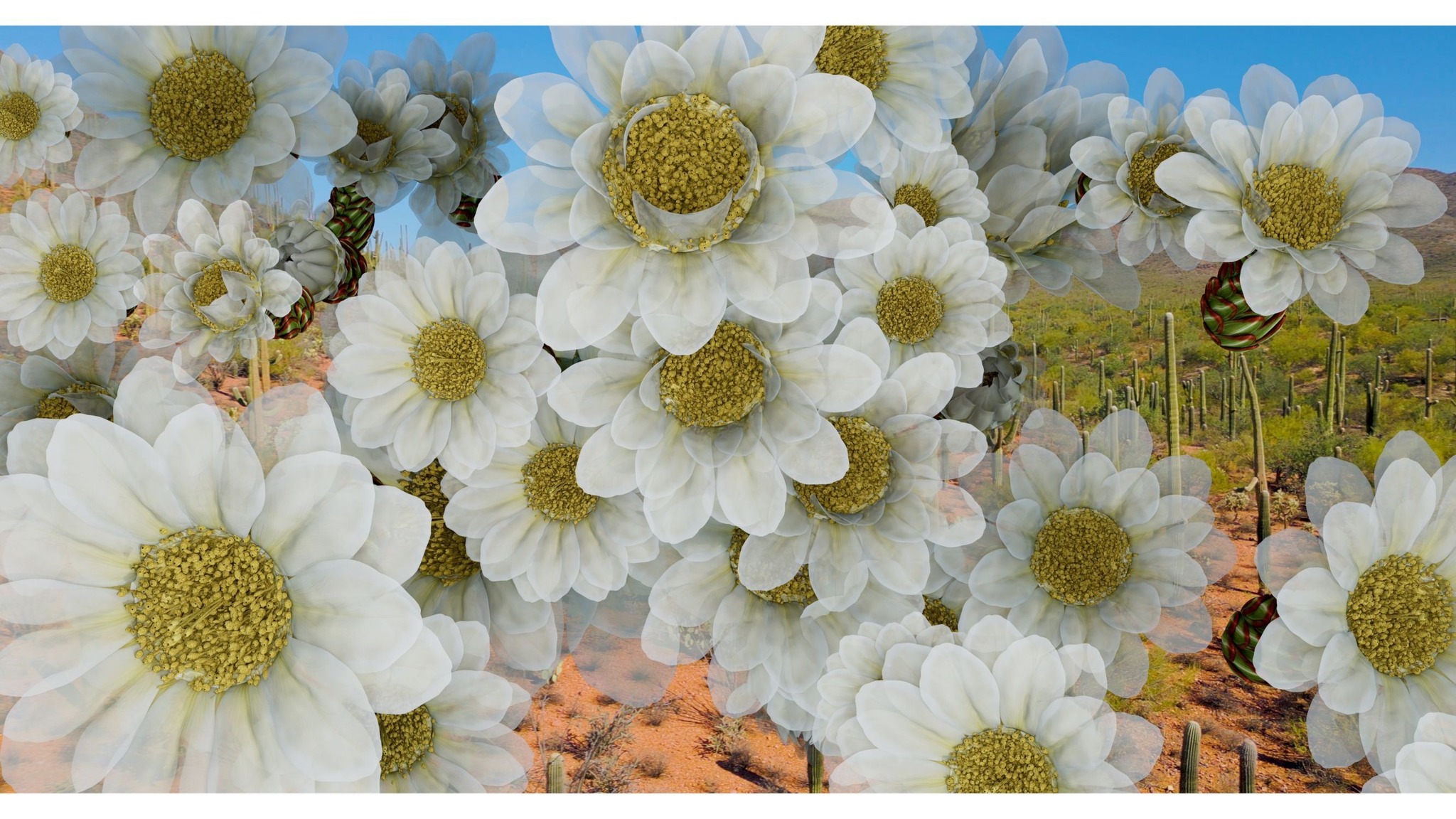
Screens themselves are like unrolled scrolls. The projection overflows the screen, and the screen, in turn, overflows the projection. On the left, one full screen; on the right, a smaller video projector; the white wall behind them. Three kinds of white compose an asymmetrical field of vision. It is a game of frames: a black frame stretched with white canvas, itself a frame, pulled open by the projection. When you slide one of the four screens into a particular position, a physical kind of dissolve occurs: projection and reflection negotiate, light strikes the wall, the wall enters the work.
Shu Lea Cheang deliberately separates her work from “interactive” and renames it “activating.” Activating is a summoning, as a shamanic device, calling-back of her trans musician from silence.
Aérea Negrot’s voice is buried here. It must be released through the labor of the audience’s body. Virus logic and fermentation logic happen at the same time: the body keeps pushing, so that a voice already dead can continue to exist in the fragments of activating.
By now four or five other audiences had drifted in. We pushed the screens together. You can’t push the same screen as someone else, so each person chose their own and pushed. Aérea returns in fragments of labor, called back by five different bodies at once.
On the screens, the text loops as a kind of post-human manifesto on trans utopia:
A trans utopia is a world with the right to self-agency, self-determination, and personal autonomy.
A trans utopia is a world where healthcare is a human right.
A trans utopia is a world where expression of culture and individuality is encouraged, and assimilationist ideals are rejected.
A trans utopia is a world without boundaries or borders, literally and figuratively….
Shu Lea Cheang said: “I want the museum space to become an activating space.” What does it activate? A trans love, across bodies, across media, across life and death.
I walked out of the black box. The rain had grown heavier.
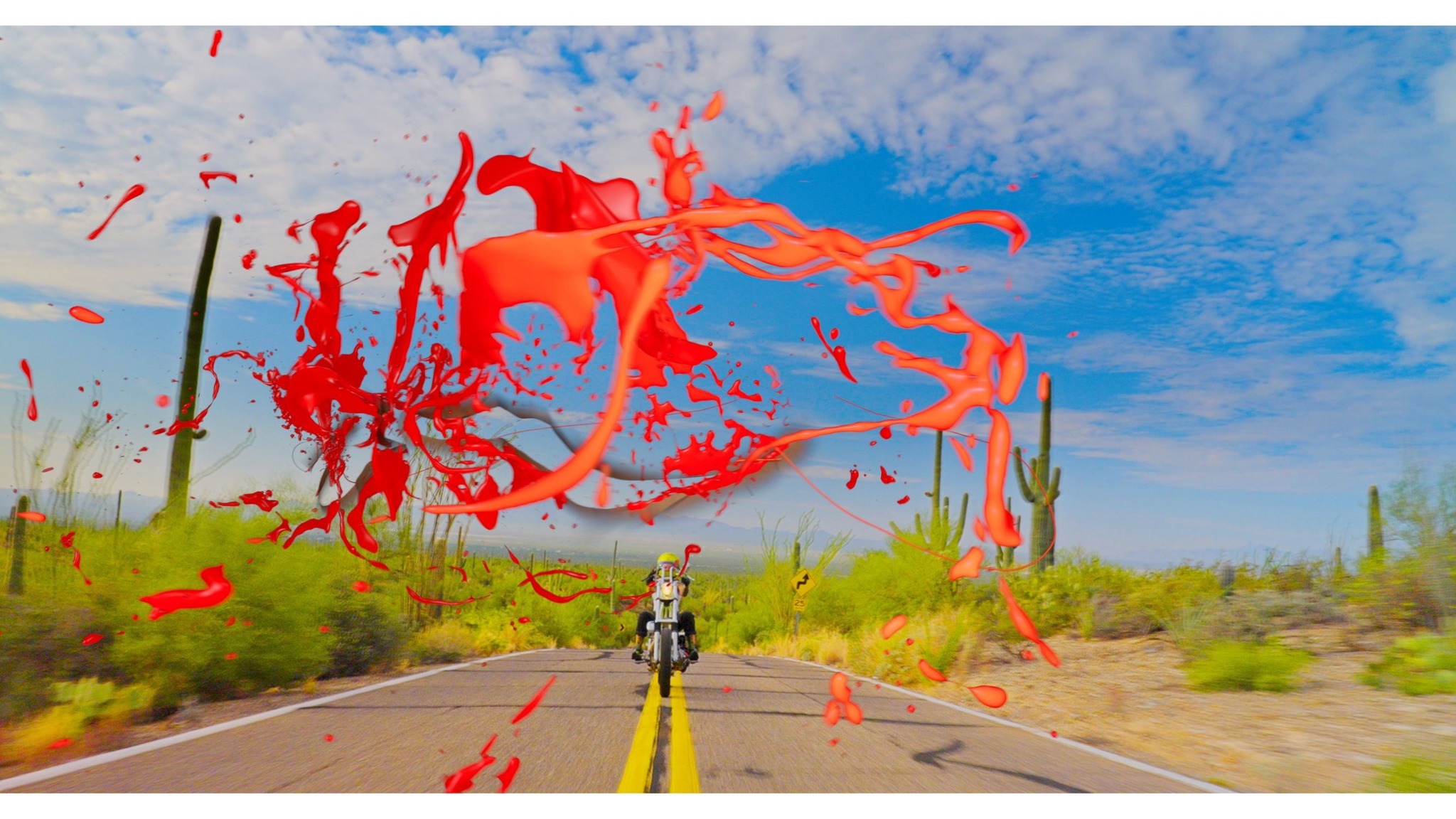
Last 4 photos and page header courtesy of the Leslie-Lohman Museum of Art
 Expressive AI