by Hengchang (Alan) Liu <hl5843@nyu.edu>
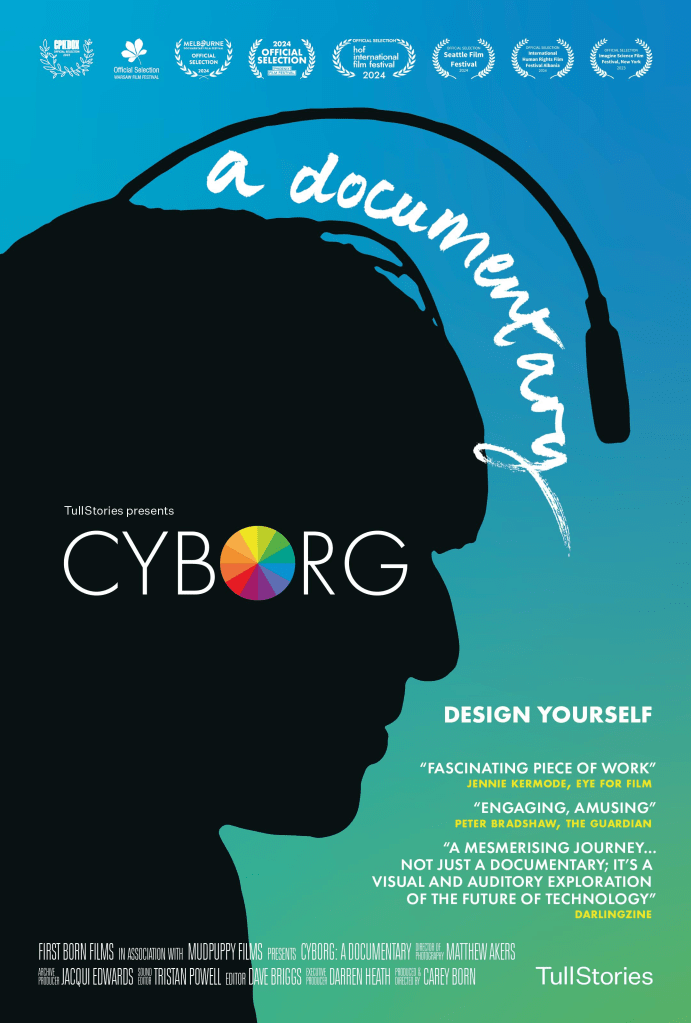
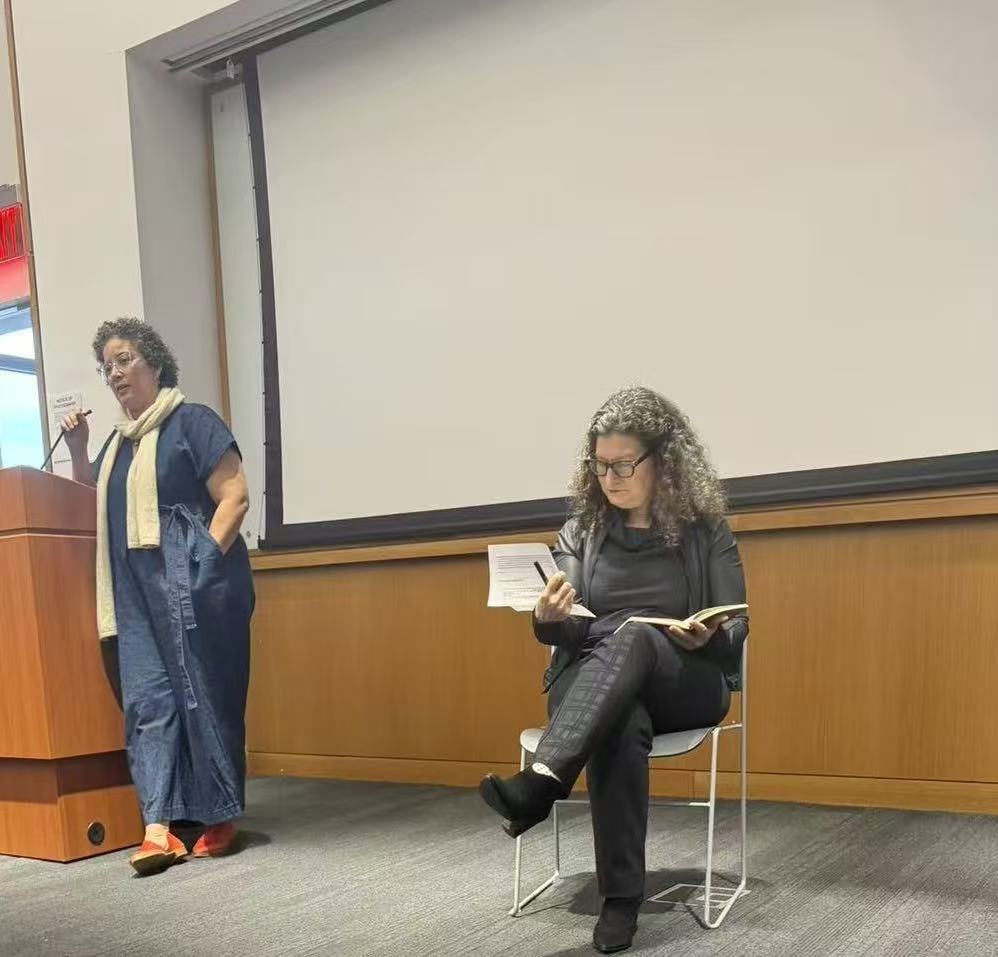
On March 30, Cyborg: A Documentary Screening and Discussion took place at 370 Jay Street, Room 1201. The event brought together a documentary screening with a panel discussion. Danya Glabau (Department of Technology, Culture, and Society, NYU Tandon School of Engineering) and Laura Forlano (Professor in the Departments of Art and Design and Communication Studies at Northeastern University) participated. They are co-authors of the 2024 book Cyborg. Natasha Schüll (Professor in NYU’s Department of Media, Culture, and Communication) also joined, along with a former NYU IDM program graduate student who presented her own work in relation to the topic. The event moved between the documentary itself and the wider discussion it prompted. It focused on bodily augmentation, sensory expansion, disability, artistic experimentation, and the changing relationship between humans and technology.
Cyborg: A Documentary
The screening centered on Cyborg: A Documentary, a film about Neil Harbisson and Moon Ribas. Both artists are connected to the Cyborg Foundation and Transpecies Society. They advocate for bodily augmentation, both as personal practice and broader vision. Harbisson, who is color-blind, is known for an implanted antenna that lets him translate color into sound. This allows him to “hear” colors rather than see them. Moon Ribas’s work, by contrast, emphasizes artistic experimentation. She uses implanted and wearable devices to form new sensory relationships with movement, vibration, and the environment. Together, their projects present the cyborg as a lived attempt to redesign the body and expand human sensation. The film also shows that this path is not frictionless. It touches on the social and political resistance they face, including public hostility and even death threats to Harbisson for his modifications. The documentary becomes not only a portrait of experimentation and self-design, but also a record of the unease and opposition these transformations provoke.
The film also opens up a set of tensions between repair and enhancement, necessity and experimentation, and the desire to overcome bodily limits, as well as the social, ethical, and philosophical questions that these transformations inevitably raise.
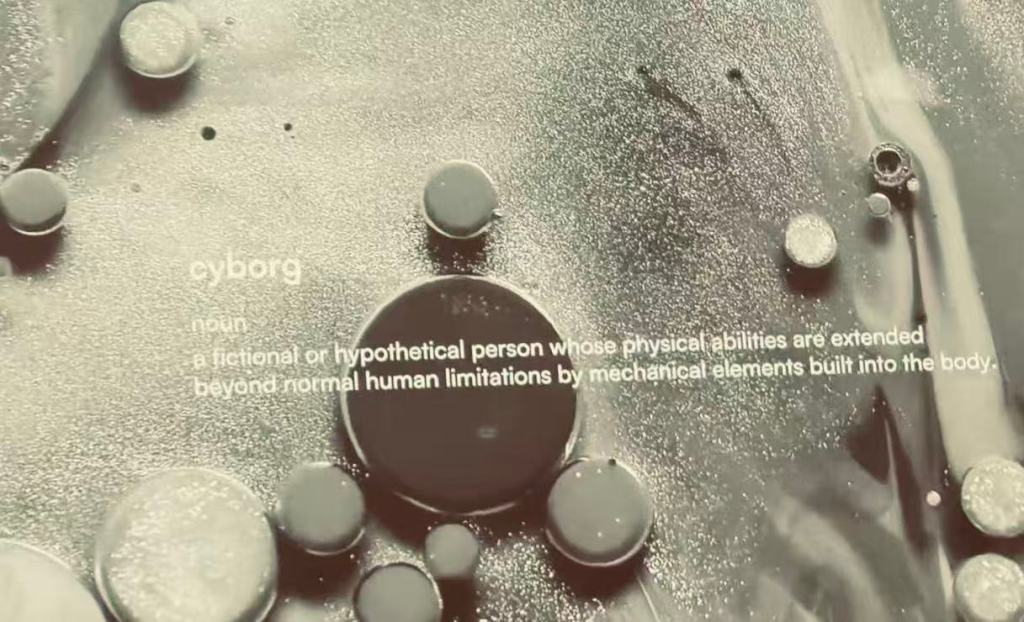
Cyborg perception as sensory expansion and social visibility
One major thread in the discussion focused on how the documentary presents cyborg technology as a way of reorganizing perception. Danya Glabau explicitly framed this line of inquiry through Natasha Schüll’s interest in forms of attention, raising the question of whether the technologies shown in the film deepen perception or also introduce new demands, dependencies, and forms of vigilance. Schüll’s contribution clearly helped shape this direction of the discussion, while the broader exchange moved toward the idea that augmented senses are never simply “extra” senses. Rather, they involve a different orientation toward the world, whether that means hearing color, sensing direction, or experiencing environmental vibration differently. Those bodily technologies do not only reshape inward perception; they also affect outward visibility, making the cyborg body an object of curiosity, scrutiny, and social reaction. Neil’s antenna, for example, attracts constant public attention, curiosity, and scrutiny, making cyborg embodiment both a sensory and a social condition.
Between enhancement, disability, art, and regulation
Such post-human concepts and practices inevitably invite a rethinking of morality and ethics. Questions of enhancement, disability, artistic self-design, and ethical regulation ran through the discussion in a more open-ended way than the documentary itself sometimes allowed. Rather than accepting bodily augmentation as a straightforward sign of progress, Laura Forlano drew attention to the film’s deficit-based language, especially in the way Neil Harbisson’s condition is framed as a lack before becoming a technological “improvement.” Speaking from her own experience as a disabled cyborg using medical devices, she questioned the idea that new forms of sensing must necessarily come through technological addition to the body, pointing instead to other ways of living with difference, adaptation, and embodied knowledge.
From there, the cases in the film resist any simple classification. Neil’s modifications can be understood at once as compensatory, creative, and identity-forming, while Moon Ribas’s work appears more openly tied to artistic experimentation. This ambiguity led to broader questions about legitimacy and control: who is authorized to alter the body, under what ethical conditions, and through what medical or institutional frameworks? The discussion also made clear that such technologies do not remain confined to the sphere of personal experimentation. Natasha Schüll, for example, referred to attention-monitoring devices used in educational settings, including cases in China where wearable systems allowed teachers to monitor whether children appeared attentive in class. Any instance of a student’s attention wavering, whether conscious or unconscious, can be captured by the apparatus. Even the degree of attentiveness is subjected to minute analysis; in this sense, such technologies risk constructing a kind of digital cage. In this sense, bodily technologies emerged not only as matters of self-expression or enhancement, but as part of larger systems shaped by power, regulation, and unequal access.
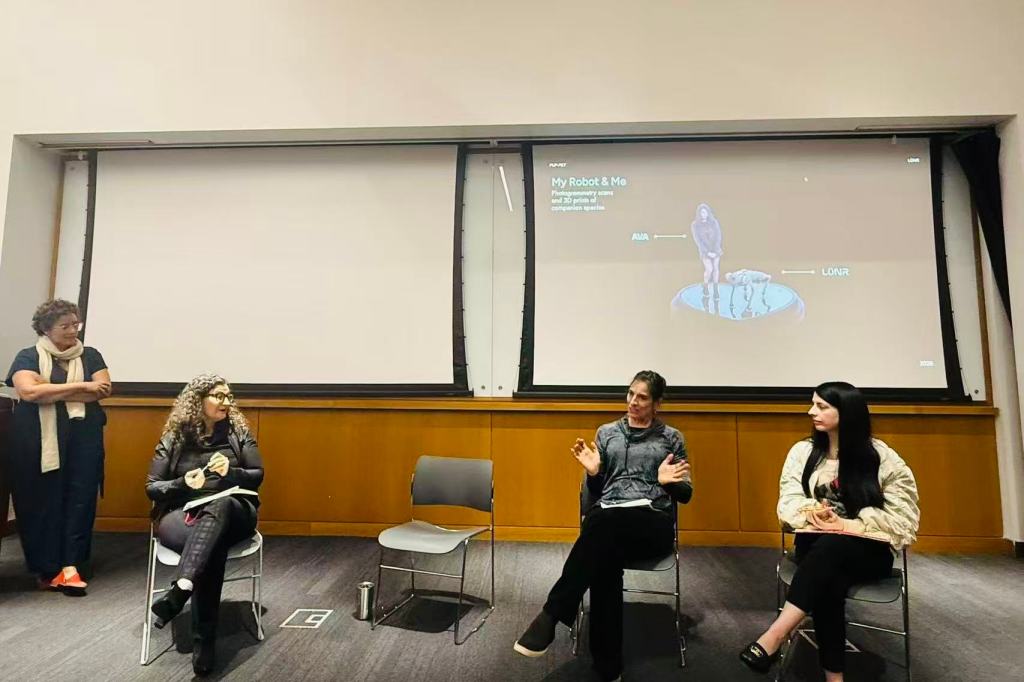
 Expressive AI
Leave a comment