by Clone Wen <cw4295@nyu.edu>


In September, New York’s Museum of the Moving Image (MOMI) and Amant at Brooklyn opens a dual exhibition presenting four major moving-image works by the Tokyo and Shanghai based artist Lu Yang: The Great Adventure of Material World (2020, 27 min), DOKU the Self (2022, 36 min), DOKU the Flow (2024, 59 min), and DOKU the Creator (2025, 61 min). Together, these films chart LuYang’s transition from video art to feature-length 3D animation. They demonstrate new possibilities enabled by AI and animation, namely that a single independent artist can complete an animated feature film that would normally require a whole Hollywood studio. Yet Lu Yang’s process does not rely on AI engines alone. It is grounded in her earlier video art for the DOKU cycle, with the 3D work built by gradually accumulating and reusing prior digital assets. From UterusMan (2013), one of her earliest characters, Lu Yang has laid her path towards the AI-generated DOKU the Creator (2025) performed by her own digital doubles today.
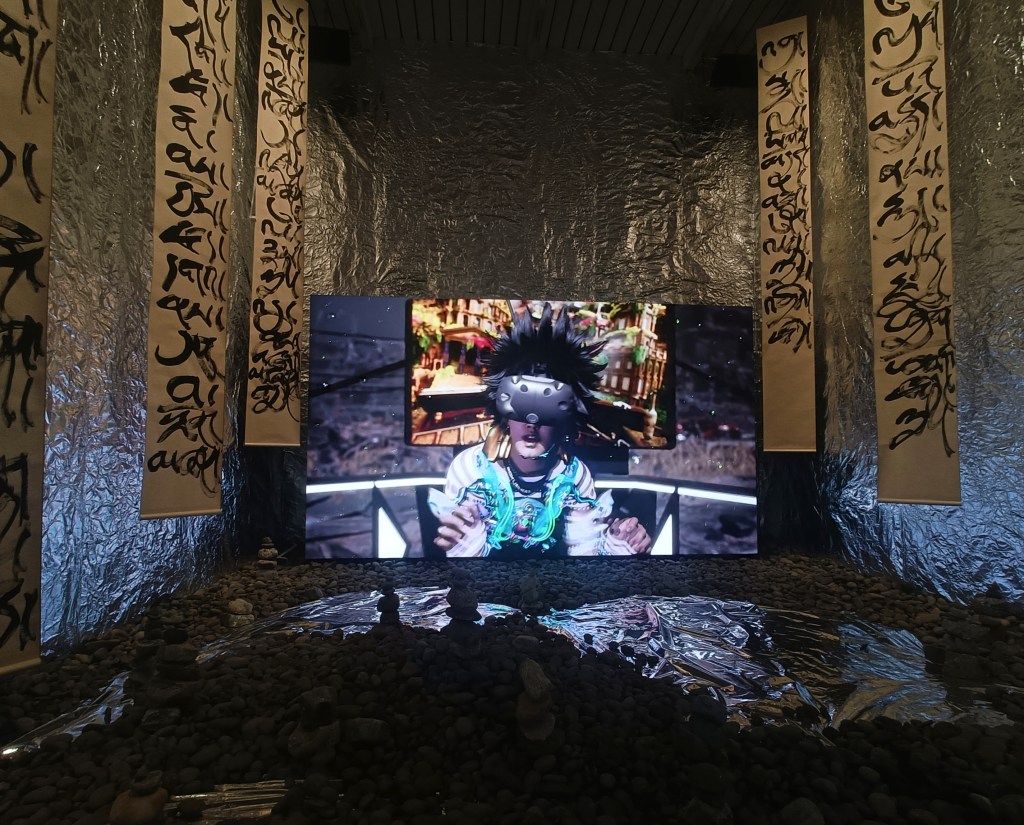
DOKU the Flow (2024, 59min)
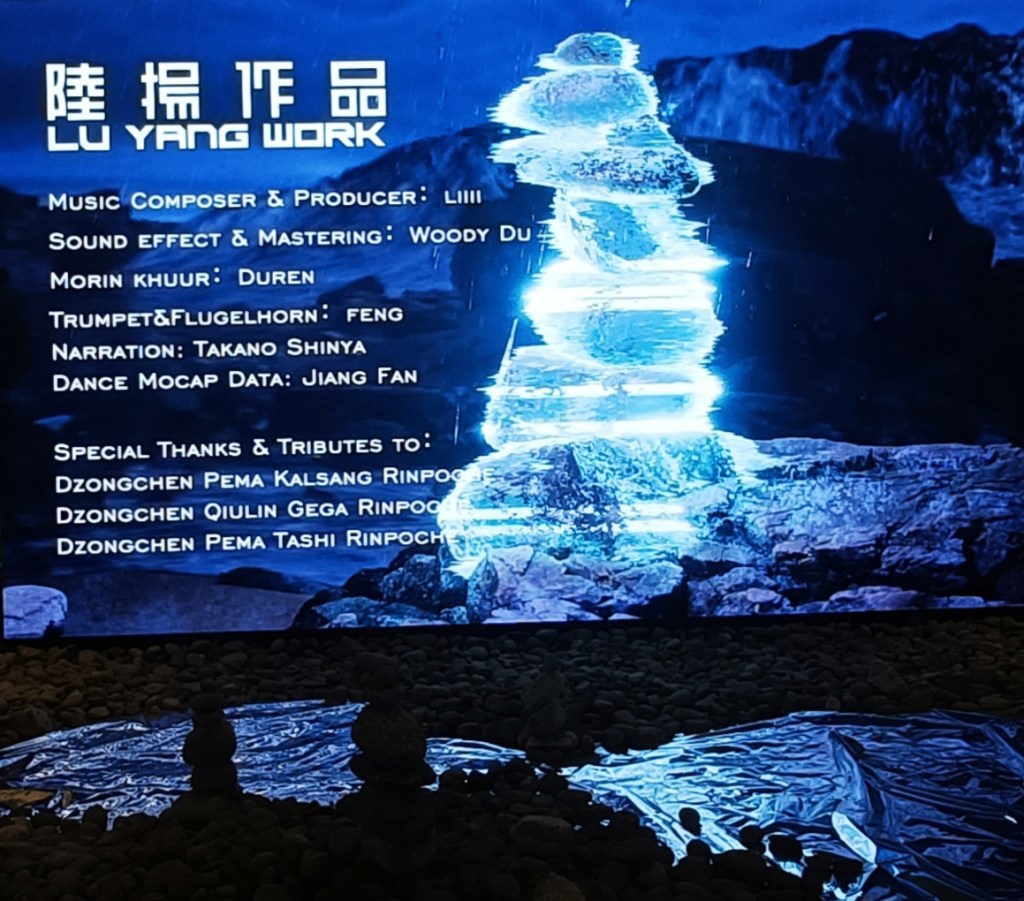
DOKU the Flow is an adventure film that unfolds as a dreamcore of reincarnation through the Tibetan sky burial ritual. LuYang’s nonbinary and asexual flesh is reloaded, dissolved, and reborn as each new digital identity moving through the six afterlife realms. It is made of the pop oriental collage that gathers every previously-created digital LuYang: The posthuman UterusMan levels up into anime-style street fighting in Shibuya, Tokyo. A kung fu master LuYang dancing with Vajrakilaya and Vajrapani. And the Tibetan Buddhist wheel of rebirth is translated into a casino roulette table. LuYang’s digital body sails across Tokyo and New York; skyscrapers turn into tombs and then into a city-scale LuYang cemetery. City cemetery then becomes spiritual mani stones and cairns on a Himalayan altar, which then shift into an animist altar by the sea. From the sea arrives a Noah’s Ark carrying animals and the sins of samsara. Aboard this ark, a cinema screen loops LuYang’s earlier films while a murmuring voice-over descends into illusions within illusion and dreams within dreams.
The diasporic collage of Buddhism imagery traces back into from LuYang’s own lives: a family steeped in Buddhist philosophy, a childhood among medical devices, a life moving from Shanghai to Tokyo, and deep influence from Japanese pop music and anime. In the end she gives back to the essence of film: cinema as eternal dance, the circular movement of the camera, and a cinema of attractions as visual art. LuYang’s cinema is, first of all, self-projection. She does not perform another person but a digitized self. While the 2024 Hollywood SAG-AFTRA strike centered on the misuse of digital doubles and on the copyright of digital assets, LuYang took the opposite path and secured full sovereignty over her own assets. She is both director and principal performer. Although she does not perform in the traditional sense, she has repeatedly recorded motion capture for her digital self. She has scanned herself and captured her movement since Delusional Mandala (2015) and Delusional Crime and Punishment (2016). Her digital double now runs through the three DOKU films from 2022 to 2025. The credits read Concept, Writing, Performance: LuYang. This trinity of labor points to a new independent method for digital animation and AI-generated film that could challenge auteur and producer-centered models.

DOKU the Creator (2025, 61min)
DOKU the Creator is LuYang’s first film to introduce AI-generated sound and image on a large scale, closer to an animated documentary than to fiction. LuYang appears as a two-faced Shiva. On one side, she is a self-mocking artist wrestling with reputation and capitalism. On the other hand, she is an original deity of illusory creation. The work even inserts footage from the Times Square Midnight Moment of December 2023, when DOKU: Digital Reincarnation played nightly on more than 90 Times Square screens. The artist folds her own exhibition documentary into the moving image to create a reflexive projection of fame.
Where DOKU the Flow (2024) credited human collaborators for sound design and production assistance, DOKU the Creator (2025) attributes sound and AI visuals to DOKU, the digital double born in DOKU the Self (2022). This newly born identity, and its labor, replace parts of the collaborative division of earlier films, making the piece a joint creation by the real world LuYang and her virtual counterpart. But as DOKU, the created AI, comes into an actual name on end credits, it also produces an unease about AI-generated continuity and the possible disappearance of real labor. Each time the real model of DOKU the character reappears, there is a measure of solace, as if briefly retrieving an echo of certain human within the flood of generative and glitched terrains.
 Expressive AI